Yvonne Heimann [00:00:00]:
In logistics, people don't always picture a woman as the one in charge. Ask me how I know, as a former electrician and today's guest, Hannah Herckes, knows that firsthand. She is the founder and CEO of Boss Lady Logistics and she built her company in a male dominated industry where she was often underestimated before she even spoke. This episode is for anyone building in a tough industry, learning to trust their team and choosing to lead with clarity, accountability and resilience.
Yvonne Heimann [00:40:00]:
Now, Hannah, I'm curious, what first pulled you into logistics and what made you stay long enough to build something of your own?
Hannah Hurckes [00:00:51]:
Yeah, that's a great question. So I kind of fell into logistics like a lot of people do in this industry. My brother drove truck and so I kind of got a little bit of a taste of it and then in 2016 decided to go into the brokerage space. So it was just, you know, an industry that I was familiar with and it was in the family. So I thought, you know what, why not give it a shot and not use my interior design degree that I had gotten previously? And the reason I've stuck around is because we are building something bigger than a logistics company. Company. Our mission statement at Boss Lady Logistics is providing quality logistics support and empowering women in transportation. And I firmly, firmly believe that empowering women in transportation is the way that we're going to shape and grow this industry for the better.
Yvonne Heimann [00:01:38]:
And I'm getting goosebumps because I'm also one of those people. Right in the evening, I'm TikToking and I have a couple of my trucker ladies on Tiktok where I'm watching and it's, it's interesting to watch because holy, are there badasses and also some of the risks that comes with that. Right. So I would love to hear from you as a woman in logistics. I know you are changing the status quo. I know you are changing things, but what a. How do you show up even? I'm like, I had some situations with me as an electrician where I had to, I had to grow a thick skin, I had to be one of the guys. Right? How, how do you balance that as a woman with the preconceived notions that we run into with the boys club with, yeah, being in a male dominated industry and be like, yeah, no, we are changing this thing.
How? How?
Hannah Hurckes [00:02:46]:
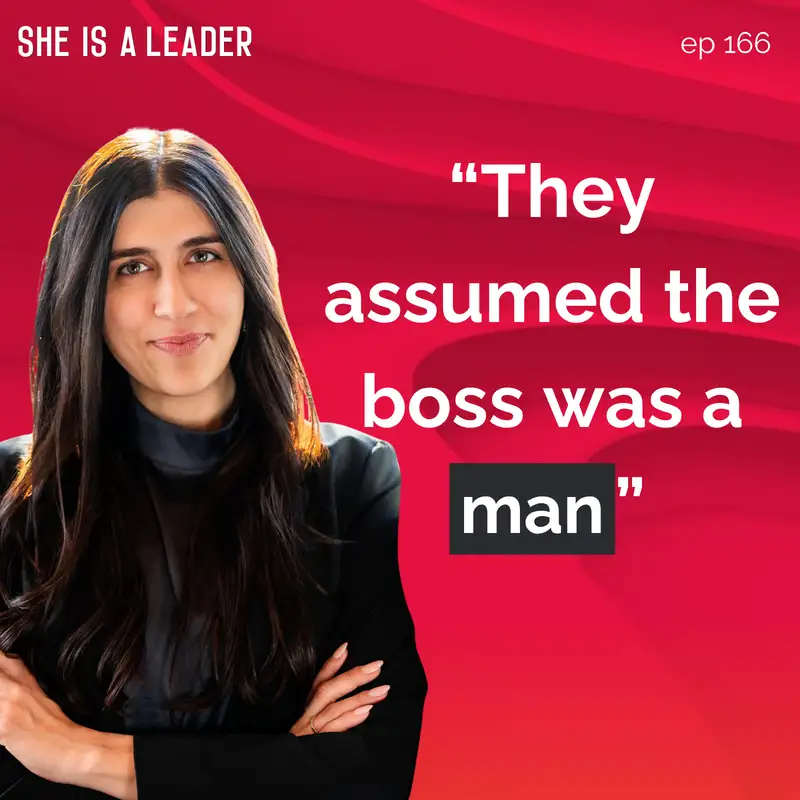
No, I feel you. Because that was my question that I asked myself when I joined. I don't think that I had a full understanding when I joined the industry of how disbalanced it was right. I was kind of under the impression, growing up in Los Angeles as a millennial, that diversity is everywhere. And I definitely was living in a bubble. And I got hit right in the face with some reality that one of the first times I was at a logistics conference and I had contributed to some of the conversation, it was a conference for owners in the business. I was meeting some people afterwards, and a man walked up to me to shake my hand and tell me that, you know, he likes the comments that I had made. And the first thing he said to me was, I like the comment you made.
Whose assistant are you? So I was young at the time. It was when I had first joined the industry. I was in my twenties and once again living in this bubble of thinking that everyone treats people the same. And it was a stark reality. I had an emotional reaction. And looking back, it was my best reaction at the time other than, you know, like, making a huge scene. I kind of just ripped my hand hand out of his and said, I'm the owner of a business, and walked away. But I.
Hannah Hurckes [00:04:14]:
And I. It affected me very deeply, and I took it very, very personally. And it's experiences like that that actually toughen you up. And not that I would want something like that to happen to me again, but I will say it has shaped and grown the leader that I am, because I know the challenges firsthand that women face in male dominated industries. The idea that, you know, I'm at a business owner's conference sharing very good ideas and someone assuming that I'm an assistant, and maybe that was because of my age, maybe that was because of my gender, but I can almost guarantee that if there was a male version of Hannah standing there, he would not have been asked, whose assistant are you? And, you know, over time, you grow thicker skin and you realize that this is the world we're living in, and you grow up a little bit and your emotional intelligence improves. And so. So when things like that come across my plate, which they still do to this day, it's not something I take personally anymore. I understand that this is the world that we're living in.
This is the narrative that has been written. And the best way to get rid of that is to rewrite the narrative, which is what I'm hopefully achieving.
Yvonne Heimann [00:05:29]:
One boss lady at a time. Now, your brand name is bold, right? Boss Lady Logistics. And I'm curiously curious. What does Boss Lady mean to you in practice?
Hannah Hurckes [00:05:43]:
I am not Boss Lady. And even though the company is named Boss lady, it's not me. It's more of an idea. And it applies to literally anyone and any. Everyone who is in this industry or any other industry and killing it, killing it at what they do. And quite frankly, every woman in any industry is killing it at what she does. And when I think about, you know, the words boss lady, I want it to be empowering, I want it to be strengthening. I want women to see a reflection of themselves in me when I represent myself.
And I want them to really, really embody what it means for them personally to be a boss lady. And so if I can exemplify that in any positive way for any woman in the world, then I've achieved my goal.
Yvonne Heimann [00:06:32]:
I love that. And I do think you are boss. You're part of us. Boss Lady.
Hannah Hurckes [00:06:36]:
Absolutely. I'm just one of many.
Yvonne Heimann [00:06:40]:
And I'm curious with, with this idea of living, living as an example in those moments where you run into those perceptions, where you run into those point of views, where it's like, so whose assistant are you? Or whichever way these moments show up. You did mention, number one, you don't take it personally anymore. I feel you on that one. I went through the same kind of growth and decision back in the day when I was working as an electrician. How do you manage those moments now? How do you protect your authority? How. How do you show up in a way that's like, so, by the way, I'm not the assistant. And how do you start changing this narrative? How do you show up in those moments?
Hannah Hurckes [00:07:35]:
I want my actions and my service to speak for itself. I don't want to have to tell people, you know, we do our jobs better than XYZ or we are the solutions provider for you. I want the reputation and the service to speak for itself. And that includes how I show up in everything that I do. Even if it's something that's not related to work. Like, even if it's, I'm going to a volleyball game with my kids later and it's going to be how I show up at my kids volleyball game, how I talk to people, you know, how I present myself, the things that I say, the things that I don't say. Leading by example, I feel like is the most strength that we can have, especially as women, is to just show by our actions how it's supposed to be done. And I'm standing in my authority because I am confident in my abilities.
Because at the end of the day, everything in my life could go away and I would know that my abilities will help rebuild it. And so having the confidence in myself and the mindset shift that has to happen in order to build, build that confidence in yourself. It really just, I mean it exudes in through everything that you do.
Yvonne Heimann [00:08:50]:
And I think part of that is also being able to look in the mirror in the morning and say I've done the best I can and I've been fair and I've been, I've, I'm okay with the way how I'm doing things. I think that's a, that's a big part for us too where I think in a lot of quote old style business, for a lack of better wording, where it's all about the profit, where it's all about just the gain of the business. I think us as women and especially listening to you too, it's, it's a support, it stays a mission behind it there is changing the status quo and not just the bottom line. Don't get me wrong, we need to pay attention to the bottom line too because how are we going to take care of a team if we don't pay attention to the bottom line? Which brings me to walking that balance. Right. We as women know that. I'm assuming you probably went into the situations too.
Yvonne Heimann [00:09:49]:
When we set expectations and boundaries often enough we might get the label of bitch or whatever it is. So I'm curious on how do you set expectations? How do you set boundaries or potential consequences if things don't go as planned? Without at times we're going to be perceived certain ways. Right. But without just I'm the boss and turning and walking away. Right. How, how do you find that balance between yes, we want to support people, yes, we want to change the status quo. Yes, we are focusing on women and, and also being clear on expectation and consequences.
Hannah Hurckes [00:10:37]:
Yeah, and that's an incredible question because that is the balancing act of being a business owner. And at the same time, while building my business, I am also raising three boys. And I really attribute a lot of the things that I practice in business to parenting. You're going to talk to every single employee differently. Just like you're going to parent every single child differently. You're going to set expectations for them that are at their skill level. For example, I'm not going to ask my 7 year old to do certain chores that the 13 year old is ready and capable and tall enough, let's say to do and vice versa. You really have to cater whatever it is to the specific person in your business.
Hannah Hurckes [00:11:20]:
And what works for one person may not work for the other person. And having open and honest feedback with your employees, I think is the best way to really help that balance. Because then there are no surprises. You know, the, the quotas, the expectations, you know, they are set forth by the boss, me. However, they are over time strategically created with the employee or with the department. And so when my employees are a part of building Boss Lady Logistics, and that's why I say I'm not just boss lady, because the women that work for me and the men that work for me are all killing it in their own right and doing what they can to pull the rope in this business. Now, I will say that there are times where I feel like there are levels, right? We talk about micromanagement. I will not micromanage.
Hannah Hurckes [00:12:12]:
That's not something I'm willing to do. And I make that very clear pretty much during the interview process with employees because I want them to know that there's not going to be an oversight committee of, you know, Hannah, double checking every single little piece of your work. It's not, it's not effective for you, it's not effective for me. It's. It's just not how it is. However, I do have an open door policy in terms of if you have an idea to help improve your role in this company or someone else's role or a department or a process, bring it to me. The amount of emails and huddles that I have with employees all throughout the different levels of the business on a daily basis where they are able to contribute their ideas and sometimes I use them, sometimes I don't. But having that open dialogue really, really empowers people to be able to stand up.
And so those expectations and reality just get a little bit closer.
Yvonne Heimann [00:13:10]:
And I'm curious because we here at FemAuthority do similar, right? Where it's like, hey, where do you want to go? Where do you see yourself? And realign personal goals with business goals. And we seem to be working quite similar to you. And what I have experienced is with new team members, they often come in with a, you want what you. You actually want to listen to me or one, one big piece for us is life happens, right? Especially working with women. There's going to be a week in the month that you might just tell me you have no energy left or just life happens, right? Parents are getting older. Whatever life event it is, I don't need to know the specific life event, but I need to know when you are not at your 100%. And with this bringing team members into the process, especially with new ones, I have experienced this moment These moments of you were what? To actually care about my opinion. Wait, you want to pick up the slack if I don't have a hundred percent day what's happening here? And I have experienced this disbelief and in my team, the nuances has taken them sometimes a few weeks, even not a couple of months to trust this.
How, what have you experienced with your team with this open door policy and with wanting to hear their ideas and their goals and how they potentially would maybe change things or better things. Have you run into something similar?
Hannah Hurckes [00:14:47]:
Yes, absolutely. And a very, very powerful story comes to mind. We hired someone who came to us very much battered, I want to say, by her old bosses in the logistics industry. She came in with, you know, a lot of negative self talk, a lot of negative self talk about her worth, her work performance, et cetera. I saw nothing but incredible results from her as a manager. I felt like she was one of the best employees and over time we were able to help build up her confidence, you know, regrow her, her, her self esteem and so that she was able to actually fill into herself the way that she wanted to. And this employee also ran a side business. On the weekends she bakes cakes and cupcakes and we empowered her so much in, I think she only worked for us like 10 months, but we empowered her so much that she left the company to go pursue her dream as a full time baker.
Hannah Hurckes [00:15:50]:
And that is just a testament to what we're doing. I mean it's life changing. What can happen when as a boss you just simply care. That's it, that's all you have to do, is care about a person. And as far as I'm concerned, the only reason I'm able to do the things that I do and be the leader that I am and have the success that I have and is because my employees are the people that they are and are doing the jobs that they do. Because if I was still in the operator status, you know, doing all of the day to day everything, I wouldn't be able to do things that I'm doing in the world and this podcast, for example, leadership, etc. They are the reason for my success and I tell them that regularly. And I don't think to.
Your point is, I don't think employees hear that they, it's very much the boss in the wagon whipping the horses as opposed to the leader grabbing their arms and we're all going to pull this wagon together.
Yvonne Heimann [00:16:49]:
I know I have seen advantages to it of approaching teams differently. Right. Because we've seen so many of companies where, especially in these industries, no matter if it's logistics, any, any kind of male dominated industry. I've seen so many, where employees are just a number. It's like you are replaceable. Now we sound like we really approach our teams similar. What are the advantages you have seen to simply running a business with compassion? That's what I would call it. And have you potentially also seen a downside to it? Because again, everything has its good and it's bad.
Right. What's, what's your experience you can share of choosing to run a business just simply different than anybody else in your, in your niche in logistics?
Hannah Hurckes [00:17:45]:
Yeah. Once we started leading in this way, it changed the entire trajectory of the company within a year of implementation of this new process with regards to having the managers act out of a very, very compassionate way, writing a strategic plan for what we wanted for the business. You know, all of these things take a little bit of time. Once that plan was written and we implemented it, within a year we saw an 80% growth in our business. And those, I mean the numbers speak for themselves. And we talk about bottom line, but at the end of the day like it's the people who control the bottom line. And if the people care about the industry, care about the job, care about doing a good job and put their hearts into it, you're going to yield much better results in every single way. I will say the other side to that is there are people who will come into the business and try to take advantage of that, which is understandable, especially if they come from another company that is very, very opposite.
Hannah Hurckes [00:18:51]:
And you're going to expect certain things and expect your managers to say certain things or react certain ways. And sometimes it can be shocking for people in, in terms of. Well, now I'm going to see how much I can get out of this person because I've never experienced anything like this and it's so exciting and I just want to see what I can do. And I don't think it comes from a malicious part of these people. I just think it's very. Because it's so random and I can't, I mean I could name on one hand the amount of companies that operate this way. It, it's, it's not the norm. And so when people come in with expectations, they may act out of character because of, you know, the excitement of it.
Yvonne Heimann [00:19:36]:
And I'm sure you had, you had situations like that as, as have we. I'm curious, were you able to steer the ship around and change their perception and change that trajectory or was it probably a, I'm sorry, this is just not working, or is it really, it can be both.
Hannah Hurckes [00:20:00]:
Yeah, I'm, I've experienced both. I think it really depends on the person and their goals for their job, their career, the next five years. We've had a lot of really positive feedback when we sit down and have these conversations with employees and they are understanding what we're saying. And, and that's when I say it is, I think more of an accident, not necessarily a malicious intent, but you're able to really see within that first conversation with someone if they're doing it because they're, you know, egotistical or trying to get something out of you or just trying to take advantage or if it really is. No, I'm trying to do my best here and I may have acted out of turn and I'm going to now follow new processes. So I think it's really contingent on the human that you're speaking to. But I would say that most of the time when we have these conversations with employees, they are very, very receptive to it. They hear us and there was a reason we hired them to begin with.
And so if they see value in us, we see value in them. We're usually able to make it work.
Yvonne Heimann [00:21:06]:
And you mentioned that you do want to create more opportunities for women in trucking and leadership and the logistics side of things in that niche in those men dominated world. All of the things above, what are you building towards to right now? Is there something where you are expanding on the company, where more opportunities are coming up? What's, what's in your future? What's in the future of Boss Lady Logistics?
Hannah Hurckes [00:21:39]:
I mean, growth is always the top priority and if it's not like this, then it's not what I want it to be. So yes, there are going to be many more opportunities over the next couple years within Boss Lady. I also just released a book called the Leadership Reset. And that is something that can be utilized by managers, CEOs, anyone in any type of leadership stance. It's more of an interactive workbook where you can fill in your exact problems that you're having and work through them in a very strategic way to kind of help reshape and basically hit the reset button on your leadership. Because we are ever growing and ever changing.
Yvonne Heimann [00:22:18]:
Ain't that the truth? I might have gotten called out from my team last week to change a couple of things, but it's like that's, that's life, right? The only constant in life is that there is no constant. And as long as we are able to look in the mirror and ask the right questions and are able to listen and adjust, I think that's, that's what makes for a great leader. And I'm curious, what is, what is it that you want the next generation of women walking into this industry to feel, to experience? What do you want the new status quo to be?
Hannah Hurckes [00:23:02]:
Yeah, I would like the new status quo to be. Every single person who wants to be a boss comes in and be and is a boss and gets labeled that way. Right. I, I really would like to see us moving away from the labels, whether unconscious or conscious, that we place on women in male dominated fields. And I also want to be that representation for young women so that they can see even though some things might happen and people might say things to you, you can still be successful. And I think the biggest advice I have for young women is just do it. Just go out there and do it. Don't be afraid. There's no time but now.
Yvonne Heimann [00:23:39]:
And if somebody is listening, who feels overlooked right now or underestimated, what is the first belief you think they should adopt to move forward, to move out of that?
Hannah Hurckes [00:23:56]:
So the first thing that I would say is, who put that idea in your head? Because it didn't come from you.
Yvonne Heimann [00:24:05]:
Oh, yes. Oh my God. And I usually don't ask this question, but for whatever reason, I feel compelled to it. Is there anything that you think I should have asked or that you would want to share with women out there, no matter if in logistics or anywhere else that you would like to share or a question that I should have asked where it's like, Yvi, we really need to talk about this.
Hannah Hurckes [00:24:33]:
So the only thing I would really like to touch on is kind of piggybacking off of my last statement of who put that into your head. I think that especially as leaders, especially as women, we are told a lot of things and we are labeled with a lot of things from a young age. And we are told to act in a certain way from a young age. And I want all women out there to remember that those are things that other people put into your mind. And if you choose to believe it, then it can become your personality. But at any point you can choose to not believe it. And I think remembering that it did come from someone else is what helps people to then say, this is not my belief about myself and change the narrative.
Yvonne Heimann [00:25:25]:
And I would love to piggyback on your piggyback. Also pay attention to your language. We so often take on those labels as truth. And I'm gonna go with some standard labels that usually apply, like, I'm a mom, I'm a business owner. I'm a leader. Own those labels. Say, I am. Heck, yes.
But I am not lazy. I act lazy at times to build automation so I don't have to do the damn thing twice. Doesn't mean I am lazy. I might be acting lazy. Or today I'm lazy. I see there. I'm working on my language too. Today I'm just gonna have a lazy day because you know what? I can stay on the couch and just read my Kindle book for the whole day.
Pay attention to those languages. It's also been a lot of exercise for me lately to not impersonalize those labels and take them on as a personality. You can work around it. You don't have to use it as a I am statement. Use the I am statement for the cool shit that we want to keep everything else. We have days. Yeah, I have lazy days where I don't leave the couch and read all day. Doesn't mean I am lazy.
Yvonne Heimann [00:26:48]:
And, oh, my God, is that so true. Because I'm like. I. Look at me, I'm like, yeah, I'm this and I'm that and I'm that. I'm like, no, thanks. Thanks, Hannah, for reminding me to really also reevaluate those labels that have been put on me from so many people. I'm like, we literally grow up with it, right? No matter if it's our close circles, if it's our parents, if it's our family, if it's our city or village, or if it's a generation as a whole and just what the human status quo is right now. And I would say Hannah's story is definitely a reminder that leadership is not being welcomed in the room.
It's about deciding you belong there, there. And I would say, Hannah, you definitely decided you belong there. And then building. Building your standards, showing up with your values and your standards to. To prove it, to show up, live by example. And if you've been waiting to feel ready, let this be your sign to move anyway. Lead with clarity. Lead with discipline.
And when they assume you are the assistant, not the boss, just keep building until the results make the introduction for you. And with that, Hannah, thank you so much for joining me today. I loved our conversation, and thank you for reminding me to check on my own labels again. I need to clean those up.
Hannah Hurckes [00:28:28]:
Thank you.
Yvonne Heimann [00:28:29]:
Bye, everybody.