Yvonne Heimann [00:00:01]:
Have you ever felt stuck in a life or business that just doesn’t fit who you really are? Today, we're exploring what it takes to truly shift your identity and break through personal and professional limitations. For many of us, there's the pressure to specialize in just one thing, the struggle to rebuild confidence after big moves or setbacks, and the stress of carrying old mindsets that no longer serve us. Add in anxiety, self-doubt, and the challenge of finding your purpose, and it can feel overwhelming to make lasting change. Joining me is Alexandra Terrey, international entrepreneur and creator of the CEB Method. Alexandra blends neuroscience, biology, and emotional fitness to help people unlock their highest potential. In this episode, we’ll talk through her inspiring global journey, her mindset tools, and her daily practices for emotional clarity. Expect practical steps you can use to reconnect with your purpose and lead with authenticity every day.
Yvonne Heimann [00:01:13]:
So with that, let me introduce you to my guest today with 20 years of international business experience as a founder across Slovakia, Thailand, the Caribbean and Australia. And I thought I made my way around. Alex is the founder of CEB Method and Neuro-Identity Shift, a pioneering approach to mastering mindset and emotional fitness to bring purposeful visions to life. So you equip people with techniques and practical tools to break through limitation, connect with their genius zone and unlock their highest potential. So my audience already knows why I brought you on. Alex blends neuroscience, biology, emotional fitness, energy work, breath work, and mindset coaching to drive lasting personal and professional transformation. Through immersive retreats and experiences, you facilitate connection, guide individuals to rewrite their identity and align them with their purpose, to lead with authenticity and clarity. And yeah, anybody and everybody that has been around for just a couple of episodes knows exactly what why I wanted to have you on.
Because I love that connection of all the things where it's like, wait, everybody always tells us, oh yeah, we are supposed to be specializing on one thing. I'm like, yeah, but that thing touches that thing and touches that thing and is connected to that thing.
Alexandra Terrey [00:02:58]:
Oh, yeah, I can't do that one. I can, I can't do for you one thing.
Yvonne Heimann [00:03:04]:
So I'm curious, I'm curious. Did little Alex think she's gonna end up in Australia after doing all these things and doing what you do today?
Alexandra Terrey [00:03:15]:
Well, not probably doing, but funny enough, When I was 6, my mom and said that we, we are going to escape communist regime and be going to Australia. And from that day I had like, probably for a year I had dreams about Australia and I was playing the tennis. I saw this beautiful house with all these people in the house and there was this beautiful beach. I never been around the sea that time when I was 6, but I just had it in my dreams. So it started kind of there. And I was very disappointed when we didn't escape. So I was this super sad child that just had this big dream to go to Australia and it disappeared of course. You know, over the years I totally forgot about that, but it actually was there.
Yvonne Heimann [00:03:59]:
Yeah, I love it. So how did you find your way finally into Australia?
Alexandra Terrey [00:04:04]:
Yeah, so I wasn't actually heading to Australia. So what happened? I had 10 years my business in Slovakia, so I was running my company. And it was very strange after communism and you know, next 20 years was very, very weird. Everybody just wanted money. Everybody just wanted everything. And a lot of people get very, very, very fast rich. And I was working for them. I was events amazing stuff and it was incredible.
Even when I talk about that today, people are like, oh wow. Like that's amazing. You know, birthday parties, they. They cost a million euros. That time, you know, it was, it was crazy. But the behavior and expectations for me as a woman there was, oh, if you are not going to sleep with this guy, you actually, you know, you can't get, you will not get another event. I was like, I honestly have enough, like I have enough of this. I'm sure there is better world somewhere else, right? So I packed my stuff and I decided to open coffee shop in Thailand.
Alexandra Terrey [00:05:03]:
And I was like, I don't know what I'm going to do, but I'm going to sell my business and I'm going to move. So I did it actually in like month or two. I just packed my stuff, sold my business and I'm now in Phuket in Thailand. Looking around, it's like, what am I going to do that? It's like what, what did I do? So, so there was the moment when I realized I was following the intuition. I was so brave. I went there but when I came there, I was so lost. So I was like, wow, this can't work. Like, I don't know the language.
I have no idea where to go. Where do I want to have coffee shop? So it was interesting for three months just to kind of finding the ground and understanding how the business is done. Because there was a lot of foreigners having their shops. So I was like, I'm going to ask everyone. So I was just going to ask people. I was like, oh, you are the owner of the shop. With my broken English. Because English wasn't that great at the time as well.
So it was so funny. But I ended up open up coffee shop and it was great. Like I met so many beautiful people there. I stayed there for three years. I, I just love that. Like it was nice but it was the style of, you know, Tom Cruise mixing the, the cocktails on the beach. And I was like, this is getting boring. Like it's cool, you know, it's really cool life like it's, it's nice, you know, you can make money, you can live there, you.
Alexandra Terrey [00:06:15]:
You can close and open anytime you want. It' really match rules there. So it was really like easy life, right? And, and everybody come to came to visit me. So that was amazing. I met so many friends again. Everybody came for holidays, you know. So I was like showing them around. So I had so much fun.
But I felt there is no enough stimulation. There is not enough people that want to, you know, achieve something. And I started to miss that a lot. So I was like, okay, so what is on other side of the world? So I took the map and I was like, exactly. Other side is Caribbean, so I'm going there. So. So
Yvonne Heimann [00:06:53]:
I love how you make that. decision where what's exactly the opposite? Oh, the Caribbean. Let's go to the Caribbean. Sure, why not?
Alexandra Terrey [00:07:03]:
I was like, what is the next step? Right? I was like, I don't know. And it was more that time at that age, you know, of, I don't know, 30s, you are like, what is cool? You know, it's a Caribbean. Sounds cool. So. So yeah, I sold the coffee shop and I moved to Caribbean and started kind of like a tourism business. So I just started to contact all tourist agencies in Europe and just started to work around and just try to, try to make money basically. So I did stand up paddle tours and a few different things, water sports. So anything that kind of came up and started to build up the company.
But it was too boring. There was like a next level of boring because there was no one on the island. There was like five plus people. No joking. That was probably a little bit more, probably thousand. And there was no public transport because it's a small island. So you were basically driving with a car 47 km and hitchhiking people. You just, you just basically stop everywhere and you just took everyone who wanted to go to the town.
So it was again like really extreme experience. And yeah, and, and then I met, of course, he's the man always. We always said everybody who came Australia is a man.
Yvonne Heimann [00:08:13]:
Like, yeah, I know something about that.
Alexandra Terrey [00:08:17]:
And it was funny enough, like because I met someone in Thailand. I was like, nah, that's okay. I'm just going to live my life, you know. And I left and we didn't really stay in touch but we kind of got back together when I get, when I got back from, from Caribbean. And yeah, we just started to chat for another year and then decision was made, like you're moving to Europe when you, when you don't get a job and you get a job. I moved to Australia. So we made a deal and he got a job and I didn't want to move. That is funny thing.
I really didn't want to move because he was like, we're going to Perth. And I was like, no, I don't want to go. I was like, that's not the place I choose in my dreams. So it was tough.
Yvonne Heimann [00:08:56]:
I love that. I love. And this is one of the reasons why I love this question so much is like, you never know, you never know the story that's going to come.
It's always fun now looking at that story, looking at the bravery, the conviction, the, the strength it takes to just be like, I'm not doing this anymore. Right. And yes, some, some of my listeners, they, she might be. I like the, the peace in Thailand and just wanting a coffee shop. I feel connected to you. I don't know if that's a European thing or if that comes back from the communism. Who the heck knows where it's coming from. I can take a break and I can have simple.
And then there is something where I'm like, I want to be challenged. I, I want to have that certain engagement. So, oh, I know where you're coming from. But also, if I'm done with something, I'm done with something.
That's right. So it's like I'm sitting here, I'm like, yeah, I feel like I'm looking at a mirror right now. With less pit stops in between.
Talking about those mindset shifts and all the stuff your approach sent us all around. Neuro Identity shift and your CEB method. Right, we already mentioned that. Can you walk us through how these frameworks help entrepreneurs break through their limitation and unlock their highest potential? Because I'm like, I'm pretty sure in your journey you broke through quite a few limiting limitations and limiting beliefs too.
Alexandra Terrey [00:10:40]:
Oh, yeah, totally. Yeah. So. So it was the life that I described. By now it was this perfect life, right? Like, I was brave, I was confident. I guess I trusted myself. I think that the, the simple thing that I trusted, my God, I trusted myself. I felt things.
I was like, I want this, I'm going to do it. I want this, I'm going to do it. You know, it was very easy to make decisions, but when I moved to Perth, it was strange because I couldn't find a job. I didn't know what I'm going to do because it wasn't my decision to move there. It was almost like I just followed someone, right? So it was really tough and I lost myself for so many years and it was, I couldn't believe it. I was different personality. That's why I'm talking about identity shift. Because I became a person that I didn't recognize.
I was. I lost all confidence. I wasn't sure what I want, who I am. I was bitter, I was angry, I was frustrated because I sent thousands of CVs and nobody even called me. So, you know, I didn't know how the recruitment works in Australia. So that was really tough. And then I was like money. I was all basically everything from the businesses I make.
Alexandra Terrey [00:11:53]:
After two years, you know, it's slowly disappears because life in Australia is quite expensive. So I was kind of looking at it like, what am I going to do? Like, I. Like nobody values my skills here or what is happening. And I put it on me like I'm the bad one. But it was actually not true. But I didn't see that that time, right? It was just so many things together, right? Like not the right visa. You know, people didn't want to put you in a higher position in that visa. So it was always something.
But I didn't have a chance to know. And I started business. I didn't make first year money because it was more volunteering. And I, after volunteering for one organization, I was like, you know what, this is my proposal. I will continue with you guys, but I want to be paid for it. So I slowly move into like pace. So I started to make money and. And then I was like, oh, of course it's business.
I always wanted to have business. But like I didn't understand why I even tried to find a job. So. So my old personality kind of broke down. Then I was followed by some psycho. Then three times someone tried to break into house. Then I had ectopic pregnancy. Then I have so many miscarriages because of ivf.
Alexandra Terrey [00:12:55]:
So. So all my life, personal business, you know, having the security and, and for us women, it's now important to be able to be free and independent, right? And I always had that. So I lost that. That was, that was my identity. I was always. I didn't want to depend on anyone, right? That's what I learned when I was young. So for me all that just break down as a, you know, house from cards and it was just gone. And yeah, I felt super sad and I had anxiety, fears and it was stuck in my body.
So I was like one day I was just looking at me and I was looking at my husband and he was actually my mirror because he put 16 kilos on the weight. I was like, wow. Like he's, you know, he's big guy now. He was professional athlete, right? So I was like, wow, who is doing this? Usually woman does that, right? Because we have massive influence on men. But then I learned we have all influence on each other. So I started to study more psychology and neuroscience and coaching, everything, like what you can imagine. Because I said, I just want to get out of this. And the first thing I thought, naturally, this came just as an intuition.
I was like, body is our thing, because when you feel good, you're much better, right? Like, you're happier. So I was like, let's do four months challenge. We're going to lose the weight. You know, let's do powders and whatever we. I don't know what we drink. It was probably very bad, but it was good for diet, right? And I never did before, so. So I was like, let's do it. Oh, wow.
Alexandra Terrey [00:14:22]:
And I see this man, and he's 16 kilos lighter, and he's happier. And I was like, wow. But I'm happy. So I started to rebuild myself and I started to understand that when you are stuck in fear, you can't feel gratitude, you can't feel joy, you can't feel, you know, happiness, nothing, right? You can't feel trust, you can't feel you. You can't be courageous, right? Like, you want to have courage, but you can't because you're. You're scared. So that all fear was in my body, and I was frozen. I couldn't sleep nights.
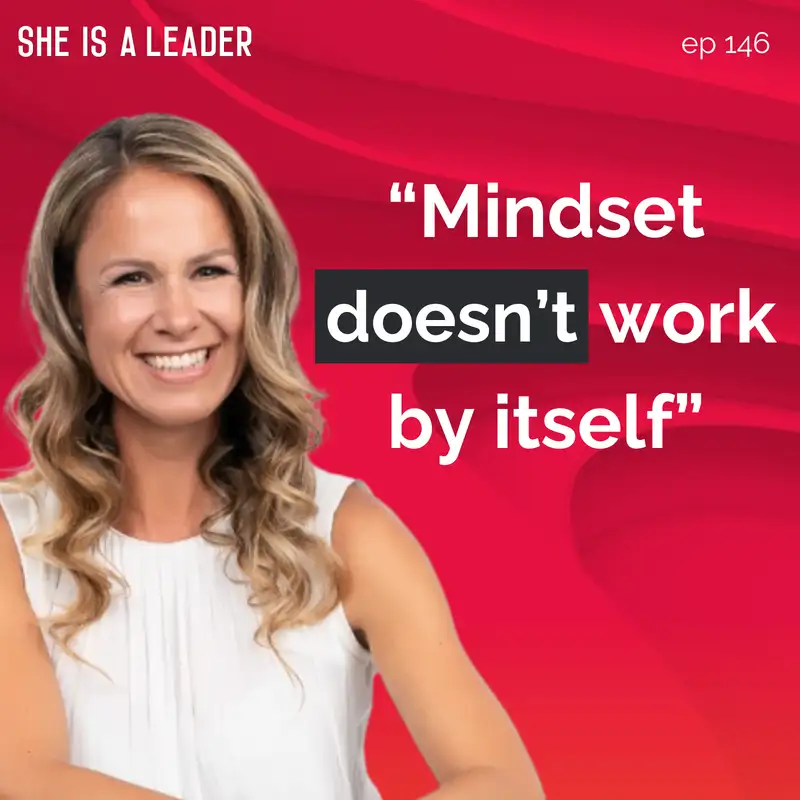
It was terrible. So I think having that, you know, and start to create. I created the. The method because I started to work with emotions, and I was like, mindset doesn't work, so what am I going to do, right? Like, I can't just be happy and. And, you know, have positive mind. So I started to rebuild that, and I realized that our emotion, when we focus on our emotions, but not like, how am I feeling? But it's more about, oh, when I think this, I actually feel that. So I started to be like, oh, but I don't want to think about how somebody's breaking in the house right now, because that is not true. That's my story.
So what if I will change the story? And I started to change the story to, oh, my gosh, I was so free when I was in Greece, you know, on the beach, and I was alone. I was traveling every weekend in Europe. That was amazing time. And just feel this warmth that was like, wow. I was so proud that I made it myself. Like, I didn't need anyone. I just made it right. And that happiness, that feeling of, oh, my gosh, like, I did it right.
Alexandra Terrey [00:15:51]:
So. So that actually created different emotions. And. And something's changing my body. And I practiced that every day until the fear disappeared. I never felt that type of fear ever, ever again. And that's already five years ago or six years ago. So.
So I realized we can change. We can change the environment that we have inside. So I, I dive into biology and neuroscience because of that. Because I was like, I. I need to understand what happened in my body. How do I explain this to people? Like, what, what changed? It's like they will look, look at me like, oh, you just thought about the, the holiday. I was like, it wasn't that. Yeah.
So I learned. So I started to explain the method, the way that when you change the story or when you focus on the story, what happened. You know, you can be on side of happiness and joy and, you know, compassion and gratitude, or you can be on side of stress and you know, the crunch energy, the, the stressful money we all have, right? Like, like that stress, it's almost like you can feel it in your stomach, you can feel it in your body. But what happened, it's the fight of life, fight or flight mode, right? And I was like, wow. So, so we actually with our thoughts, took our. Or take ourselves to fight or flight. And we can't function because we don't use our intellect properly, because we just want to fight or flight or run or freeze or whatever, you know, they talk about now. But it's, it's funny how I realized that that made me sick.
And I developed 21 food allergies. Because your organs don't get nutrition, right? Because they. The blood is just pumped into your muscles and hormones and neurotransmitters, they are released from your brain. It's crazy. It's. It's like a chemical. It's like, like you put a bomb in your body and you expect to be healthy, right? And, and then when I changed the story, I felt the chemicals. I felt like my body is changing and it was warm and nice and you start to heal.
I have no one food allergy. I have no. All the struggles. What we have from stress, constipation, you know, the feeling sick all the time, can't eat. You know, even when you eat a little portion of the food, you feel sick. That is all from stress or most of that. Of course, I'm not a doctor, so I'm not giving anyone medical advice. But most of that is stuck because everything is in solar plexus that we crunch and we are like, we are living on this stressed energy.
We don't even notice. And that was amazing when I realized that.
Yvonne Heimann [00:18:19]:
And it's interesting, you, you bring up the change of focus and the change of the storytelling. I have a client right now, actually, that I'm working with where we discovered the habit of always seeing the worst. Now I'm one of those people too, right? It's like I'm at a pool with kids and I don't see a mom looking. It's like I. I am already seeing the worst possible that can happen. I'm one of those people. And in our conversation where I'm like, you are doing the same pattern over and over again. We can see the worst, but we also want to reprogram your brain to also see the good you are.
You are not. So I. I throw gratitude journaling at him and he's like, this is just dumb. I'm like, literally texted him in the morning. These are the three things I'm grateful for. And it was a little bit. Just like any kind of workout, right? It was a little bit of a work. And just looking at these text messages in the morning, I can tell when he's fighting, when he's having a bad day and he's fighting with it, and he's just trying to find something.
But it's that building the muscle of finding the good thing, even in a bad day. And it's not that we are just deleting all the bad. It's just that retraining of focus. When 30, 40, 50 years in. In his story has told him that always the worst thing happens. I'm like, yeah, because you always see the worst thing.
Alexandra Terrey [00:19:58]:
Yeah. And it's exactly the focus. Like, that's. It's great. Like, it's great what you do. Your work is amazing. And I think understanding, you know, that was. That was the thing.
Because the gratitude journal for gratitude writing, for example, I just. Just couldn't find it helpful for me. Right. But it helps for some people. But what happened is when I realized, because I was walking the dog one day and. And I feel this amazing. This deep gratitude. Like, it's just this.
This warm, that love. I don't know. It was probably love. I. I don't know how to describe the feeling because it's really hard because I never experienced that before. So I didn't have really language around it, but I was like, I just felt so happy. I just felt so grateful. And that was the first time.
And I realized when you're writing the gratitude journal, you need to actually think about that. Like, feel it. You need to actually drop the thought into emotional state. Right? And because when. When the emotion doesn't shift your energy Your. Your. Your frequency, nothing shifts. And your body as well don't heal because the.
The thought only itself, if it doesn't evoke any emotion, it's really hard. It doesn't really change. It doesn't really stick. Right? So when you're looking at reviring the brain, how the brain revires, it's. It's really big emotional experience or is emotion. Right? So. So I, That's. That's why I kind of look at that.
And I always said, yes, we need new habits. So, you know, writing a journal, we need to. We need to do something because it's about practice. And people think, they come to retreat and everything changes for life for them. That's not true.
Yvonne Heimann [00:21:25]:
Yeah, but you're going back into your old setup. You're going back to where you came out of. You need to take these things with you and implement them.
Alexandra Terrey [00:21:35]:
Absolutely. Yeah. And you need practice, right? Everything. Everything starts working. Even meditation, people. It doesn't work for me. It's like how long you try.
Yvonne Heimann [00:21:44]:
Oh, so you go to the gym twice and you think you're suddenly gonna be Hulk Hogan or what?
Alexandra Terrey [00:21:51]:
Yeah, exactly. Perfect metaphor, right? And it's. It's the same thing with our mind. Like, we are, what, 40 years, let's say 50 years. We are programmed, right? We have already, I don't know, we're using Microsoft. But we need, you know, we want new operational system. We want, I don't know, mac or whatever we want, right? So. So you need to change a lot of things, but it's practicing, right? It's working on that every day.
Because you just can't shift without that.
Yvonne Heimann [00:22:18]:
That's where I used to be. Somebody that beat myself up for falling back into old patterns.
And I'm like, you know what? These old patterns have been there for how many years? They gonna surface back up again. They're gonna remind me to get back into my meditation practice. They're gonna come back and remind me to also just be nice to myself. I. I love you. Wrote a book, Limitless Soul, which promises readers to help rewire their thinking and.
Help them regulate their emotions and align with their purpose. What are some daily practices you recommend for emotional fitness and clarity?
Alexandra Terrey [00:23:03]:
Yeah, look, I will give you first very super, super simple steps. And everybody who is listening, please, if you can take a pen and paper, it's super simple. And you can practice this every morning when you wake up. You can have pen and paper next to your bed, or you can do it during the day anytime. What works for you. Because some people like that in the evening, some people like that in the morning. But the most important part is to start to understand that emotion connection, right? So if you can just wake up and you know, first thing, write down one or two thoughts that came up first in your morning, just be aware what you are thinking or what you are thinking right now. When you're listening, maybe something pop up in your mind and think about how that makes you feel.
So most people in the morning, they wake up with a task list, right? Or oh, this is all what I need to do.
Yvonne Heimann [00:23:51]:
I feel called out. I feel called out. I'm working on it.
Alexandra Terrey [00:23:56]:
Well, look, it's. It's not bad. You look quite happy person, right? But what happens is you're already putting your body in the stress. So what we don't want, we don't want these ugly cortisol and adrenal hormones in our body, right? So we actually want to wake up in different state. So you just really be aware of the thoughts. So when you write a thought, look at that. If it's, you know, already rushing already, hurry already. Like thinking about the day or is it raining? Oh, I don't like it.
Whatever your thought is, just be honest to yourself and look at that, how that makes you feel. So when you just pause, I just drop into your body and think, oh, actually it doesn't make me feel very good or it makes me feel like I need to rush, you know, whatever it is. But being aware of that, that. That's the second step. Understanding emotions connected with that thought. And then think about one thought you can replace every morning with like it can be. Let's look at the magic that can happen today, right? Every day is a magic, right? Every day you can meet one person, two people, 10 people. And you can choose one person and tell them, I don't know, you look great today.
Alexandra Terrey [00:25:00]:
You know, I loved your energy or have interaction or you know what, go out there and call someone. You can do whatever you want. But that magic that you will, you will have in the morning in your mind, you will be guided by that. Like, it will actually guide you. When you start to do that every morning, like, okay, so what is the thought I want to think every morning? Maybe it's, you know, another beautiful day. I always said another day in paradise, right? Like we have paradise here. It's. It's a winter.
We can go to the ocean still during the winter, in the middle of the winter. It's crazy, right? So I always said we are living in paradise. So so remind that to yourself every morning. So you choose the thought, you write it down, and then think about or go back to your. You know, it's almost like you put elevator into your chest and. And belly and think about how that makes you feel, that today is power on you, and you can actually create something magical. Such a simple exercise done every day. I guarantee that your life will change.
You will be more kind, and you will meet so many more kind people. You will pause when you see someone struggling. You will pause, and you will be so proud of yourself. You will ask questions when you see someone, because you will see people because your hormones and neurotransmitters in the morning are changing. So you are more in stillness. You are more in a pause. It's almost like you do your celebrated meditation, right? Because you pause. It's such a beautiful feeling.
And you will create that, you know, more positive personality. And people say we can't change. Yeah, but we can.
Yvonne Heimann [00:26:29]:
That's where I have my coffee in the morning. It's. It was a conversation with myself. Every time I go back to Germany, what do I do? I go into an Italian cafe and I get a real cappuccino, not the American thing. So what did I do? I bought my machine. I know how to manually do those. I've been in hospitality long enough in my early age, and that's my thing in the morning with my cappuccino, with my $25 mug that I ordered from Germany, Villaroy on Bach, because I love it. I literally am.
I'm traveling. I'm nomading with my coffee maker, with my Italian beans and my coffee, because that's my hour in the morning that's sitting somewhere wherever I am with my coffee. And just time for me.
Alexandra Terrey [00:27:14]:
I love it. And you know what? I love that you do actually take the morning slowly and you take your time for yourself, because usually people are scheduled, especially here in Australia. First of all, I'm so sorry that you're living in America, because I know how coffee is there. I really struggle. But when you come to Australia, we have best coffee, so don't worry. We are obsessed with coffee. It's like, yet the best coffee in the world.
Yvonne Heimann [00:27:38]:
I'm literally buying Laza coffee to get my Italian coffee beans.
Alexandra Terrey [00:27:42]:
Yeah. Yeah. Well, yeah, I have the grind, grinding the. The company here next to my, like, two minutes from my house, and it's the best coffee in the area. Oh, my God. So next time, I will send you the beans that you will love them. Okay, I'm going to do it. So we need to send me address.
Yeah, so, so, so you already doing it, right? Like you have your, your pause and you have your kind of. It's almost like you just rest and digest. Like, we are in that beautiful system, parasympathetic system, and we actually have the time to just understanding what's going on, right? And preparing for the day. But some people have gym, 5am kids to school, 7am you know, like, and then drive to work for one hour. Like it's, it's, it's a schedule, right? Because there's a lot of things going on. But I always said just wake up 10 minutes early then, you know, or 15. Just make the time that you have actually something for yourself. And you can pause.
Because the moment you learn to pause in the morning, the pause in the, during the day, you will master it. You will master that pause during the day and that will skyrocket your business, that will skyrocket your life, that will change your relationships. It will change everything.
Yvonne Heimann [00:28:46]:
Because I always said, I'm like, yes, the moment I started taking time in the morning is also the moment when I realized that I didn't take any lunch breaks. And I often enough just work through. I'm like, no, we are not doing this. I'm stepping away. I'm, I'm, I could, I could go on forever. Alex, we might just gonna have to have you back on the, on the podcast. Tell my listeners, where can they connect with you? Where can they find your book? Where can they meet you?
Alexandra Terrey [00:29:17]:
Okay, thank you so much. First. Yeah, thank you so much. This is fun. I hope we can do this more and you will come to my podcast. So I'm looking forward to it. So, yeah, look, yeah, I have some podcasts. I can give you some links to my podcast.
I would love to have you there as well. And I'm sure your listeners would love to listen to you on other side. You can find me on LinkedIn. That's easy one Alexandra Terry. Or you can find me find my book that I published a few months ago, limitlesssoul.com and yeah, I don't know if you are publishing the links in the description of the episode so I can give you some ideas. So we have so many free resources as well. I will give you some free resources.
Yvonne Heimann [00:29:50]:
And I think we, we even have the direct link to your resource page. Yes, we always, as, as my listeners know, we make it easier. The links are all going to be in the description so you can go check out Alex, go chat with her. Go check out the book. Alex, I'm gonna. I'm gonna just have to take my Nomading International. I already got a couple of invites in Europe. Now I got some couple invites in Australia.
Alexandra Terrey [00:30:10]:
Yeah, absolutely. I think you should come.
Yvonne Heimann [00:30:20]:
Let's take this out of the States, and I'll let you know when I finally make my way to Australia. Alex, thank you so much for coming on. I had so much fun. And everybody, if you are not yet subscribed to the podcast, what are you doing? I'm pretty sure you're not here for the first time. Hit that subscribe button so you don't miss any upcoming episodes. Got it? Yeah, the German just got out it. Thanks, everybody.