Yvonne Heimann [00:00:00]:
There's a moment many business owners hit. You look at your business you built and you realize it is running you. Your calendar's full. The responsibilities just keep stacking up. And somehow the freedom you originally wanted feels further away than ever.
Yvonne Heimann [00:00:23]:
Welcome back to She Is a Leader, the podcast where we talk about what it really takes to build a business and lead a life that works for you. Today's guest, Renae Fieck, knows that moment way too well. She's a mom of 3, a feminine leadership coach, and someone who had to completely rethink how she was building her business after a burnout, family health challenges, and realizing the way she was working simply wasn't sustainable anymore.
In this conversation, we'll talk about what it looks like to lead a business differently. Renae shares how learning to listen to your body, aligning your work with natural rhythms, and creating a supportive system allowed her and can allow you to step out of the constant hustle and build a business that supports her life. If you ever wondered whether there's another way to run your business without sacrificing yourself in the process, this episode will most likely resonate with you just as much as her submission resonated with me. Renae, thank you so much for coming on. And when I saw your submission, I was like, yes, please. Yes, please. Because I am tired of bro marketing. I am tired of hustle culture.
I am tired of feeling bad. When my hormones are telling me to go screw myself and my brain literally doesn't work for 3 days. So it sounds like you have gone through a similar process I have where you're like, you know what, fuck this shit. We are doing business different. What happened in that moment? What was that? Holy fuck, I'm not doing this anymore.
Renae Fieck [00:02:12]:
Well, I started my business back probably about 10 years ago, 9, 10 years ago when my husband had been recently diagnosed with a brain tumor. And I was pregnant with my third baby, and I got what I thought was my dream job. So, you know, we had these catalysts of highs and lows all in the same year, and I had to buckle my straps, boots on, and just muscle my way through that year. But I was really looking for, or like, coming from that place of recognizing, like, you only get this one life. Coming face to face with my husband's brain tumor puts you, you know, in this place of challenging your morality and morality, um, uh, what is it called? Uh, you're like, the, the fact that we're only here, what I'm like, what's the word? Um, mortality. Mortality. That was the one. I was like, where?
Yvonne Heimann [00:03:04]:
They're so close.
Renae Fieck [00:03:05]:
It's like, yes, my mortality.
Yvonne Heimann [00:03:07]:
Honestly, going, going through cancer, my, my mortality and morality was challenged. So they are both completely applicable.
Renae Fieck [00:03:16]:
So it was just this recognition of I'm working all day, I wanna be home with my kids, and I kept living in that season for the one day someday down the road, thinking that, you know, one day when I have more money, or one day when the kids are in school, or one day when things get easier, or whatever. It was always just this like one day forward thinking to actually live my dreams. And that experience was kind of the wake-up call of you don't know that that's gonna come, you know? So many people put so much money away for retirement, and it's like, Yes, we should do that, but also don't only do that because if you never get there, like, then what, you know? And so that's when I started my business and I really started, and I started a network marketing business and I started it from this place of I just want to be home with my kids. I want more free time. I want more income. I just, I don't want anything lavish. I just want to be able to live a life that I want. And 2 years in was hustling my ass off.
Renae Fieck [00:04:16]:
I was getting up early in the morning. I was going to bed late at night. I'd be at the hospital. I was working at the Children's Hospital at the time, and so I'd be on my lunch break with my pump, eating, eating, pumping, and messaging people on Instagram at the same time. And just got to that question of like, what am I doing? Like, how am I going to do this? Like, I'm, I'm barely hitting my goals. I'm not hitting the goals I really want, and yet I'm putting everything I have into this. And that was one of those wake-up calls of really thinking, like, am I made to be an entrepreneur? Like, I come from a family history of entrepreneurs, so if it's like a DNA thing, I should have that. Why is this so hard? And kind of became that question of like, either A, I'm giving up, or B, I've got to figure something else out.
Renae Fieck [00:05:05]:
Like, this isn't working, this isn't sustainable, not gonna happen. And that's when I dove into a lot of the different research on neuro, you know, how our brain forms and how we develop habits. And, you know, I came from a nervous system, you know, I'm an occupational therapist, so I have a lot of background in the body and rhythms and routines and how our brain works and all that, and dove into a lot of that and still just wasn't figuring things out. I was like still forcing myself to do things. And that's when I stumbled across how men and women are so different and how our hormones impact literally everything about how our brain thinks, how we create, how we focus, how much energy we have. And it's really just not something that we're talking about, and it makes such a huge difference.
Yvonne Heimann [00:05:53]:
I love that you also brought up the question, the thought in the moment of, I'm coming with a background of entrepreneurship, it's like it should be in my DNA, where is it? And I wanted to quick come back to that because I think we all have that question at some point, right? Are we really made out for this? No matter how specifically you ask the question. And honestly, I'm telling you, we women are definitely all made out for entrepreneurship and do what we want to do. Simply in my opinion, by nature and by upbringing, we just need to start doing it for ourselves. We always support everybody else. We always make things happen. We freaking grow humans, or at least have the capability. I didn't, I chose not to, but we, it's like we are literally by nature built to grow things, to build things. Yes, you can.
Yvonne Heimann [00:06:52]:
So even if we are in seasons where we might be questioning that, you're the perfect example of, so what? Yes, maybe. Am I, am I not? Guess what? Yes, she did. And I'm curious, when, when you started with that realization, with the learning, with changing habits and just in general making changes in your business and in your life, what were some of those first habits or practices that you introduced into your life or into your business to, to make business more sustainable, to work more how you are working now? What were some of those first habits and practices you started implementing?
Renae Fieck [00:07:39]:
Great question. And I mean, to go just like reverse a little bit on what you said, I think one of the biggest lies that entrepreneurs are told is that it's going to be fast and that it's going to be quick. And I think that that is one of the biggest reasons that so many women struggle and like why we have such a hard time thinking maybe we're not cut out for this. And it wasn't even until just recently, recently I called my dad and like I said, he, he's an entrepreneur. My grandpa was an entrepreneur. I've got my uncles are all entrepreneurs. Like so many people in my family are entrepreneurs, but I called my dad and I said, this is my goal. Like, this is what I want to create.
This is where I'm headed. And yet it feels so far away still, like all these things, you know. And it was amazing to hear him talk about, you know, there is, there was a blood, sweat, and tears moments for him where he put everything in to get where he's at today. And one of the things he said to me that I feel like is kind of one of those things now that I'm like clinging and holding on to is that he said, you never know what failures today are setting you up for where you're meant to go. And I think that if we really just hold onto that idea that someday we will get to that destination that we have in mind, it may not be fast, it may not be quick. Like my dad, you know, he's 65 maybe today, I don't know, somewhere, somewhere in that range. And it took him from 20 to 60 to actually retire. So 40 years for him to build the business that he built that's now self-fulfilling, self-running, like bringing in the income he wants, like all those things.
And I think sometimes in entrepreneurship, especially like the online space, there's so many like, how do we get to $90K in 30 days? How do we
Yvonne Heimann [00:09:30]:
7 figures in 7 days, all of that marketing BS where it's like, don't get me wrong, yes, there is systems, there's processes, and they all work. There's enough living proof that group coaching works, that one-on-one works, that all of these things work. But even though you might have the framework to it, it doesn't mean it's the right decision for you. It doesn't mean it's going to happen overnight.
Renae Fieck [00:09:57]:
It's like, yeah, so I think like, so I wanted to put that in there, is that like, I think that there's this essence of let's get into entrepreneurship knowing that this is a, a shift that we're making and this is a commitment we're making to. Like, one of my mentors used to say, your success is inevitable. And that idea of like holding onto that, that no, I'm in this and I'm in it for the long haul. And maybe my journey is going to be slower than somebody else's. Maybe it's going to have more pauses because I'm raising 3 kids. Maybe there's going to be seasons when I'm able to show up. Great. If not, like, it gets to be my journey.
Renae Fieck [00:10:35]:
And if I'm committed to the end process, I'm going to enjoy the journey along the way rather than thinking it has to be this instant gratification that I have to get to. So I think if I were to go back to like some of those habits, those like the question you asked me, was I really started seeing it from that lens. Like, I know my dad like solidified it for me recently when I had that conversation, but I think even back then it was this essence of, okay, if I stop focusing on how fast can I sprint to the end, how fast can I get to that end goal, how fast can I get there, like, what do I need to do to set this up so that it feels like something I could do forever? And that I'm not just waiting, because it was that same mentality of like waiting till like when I hit $10K months or when I get that 7-figure year, like then everything will be magically together. It was like that same energy that I was carrying at that moment was now being just transposed into my business. And I, so I think at that time it was like really starting to rewire, okay, how do I create my workflow? How do I create my life? How do I create everything so that this feels like something I could do till I'm 60? If I wanted to? Like, how do I get into that place of, you know, creating that sustainability, that longevity, that like, this is something I love? And I think a big part of that also began to look at, okay, I don't need to sacrifice all of the fun, amazing things in my life to hit my goals faster. I can still go to dance class, I can still go to yoga, I can still go play with my kids, I can still go on vacation. Like, I can still do all of these things and know that my business doesn't require me to sacrifice my life in order to get where I want to go. I really need to build the business around my life instead of the other way around.
Renae Fieck [00:12:23]:
And I think that that's one of the biggest shifts that I made was looking at, okay, this is my body, this is what my body needs, this is what my family needs, this is what I need. Like, in order for me to feel fulfilled, it doesn't necessarily always come down to money. It's not, that's oftentimes not what we think, right? But the online business industry is so infatuated with building more money, building more money, building more money. But if you ask any entrepreneur, that's not what they want. What most of them want is the freedom. They've just tied the money to the freedom. And it's like, well, what if we could build the freedom now? Like, what if you actually had more freedom now? And I think that that shift is really what I started focusing on was like, how do I create the life I have and I want now rather than just relying on when I have more money. So I really got into that place of like this and something better.
Renae Fieck [00:13:18]:
Like I am so grateful and I'm so content and I'm so happy with my life. Like the beginning of last year, 2025, right? Yeah, I'm like, what year are we in?
at the beginning of 2025, my word of the year was contentment. Like I like wanted to ingrain so deeply that Contentment, contentment, contentment. If nothing in my business changes, if nothing in my world changes, if nothing in my life is different, how do I fall in love with what it looks like right now? And also holding space for receiving something beyond that, like whatever comes my way. And I think that is the energy that really begins to shift things for us. Like when we get into that place of, I'm so in love with what things look like right now. And I know that there's so much more bigger and better in store for me, but that doesn't even matter. Like, that's just icing on the cake at the end of the day.
Yvonne Heimann [00:14:11]:
I love that. Yeah. After my husband passed away, I had a similar situation where it's like the mortality and the realization just coming up. And what came up for me in that time is life is too short to do the things you want to do tomorrow, where it's like everybody tells you to once we hit retirement or once this or once that. I'm like, don't get me wrong, I'm human too. Fall back into old habits too, where I'm just grumpy or things are not working out how I wanted them to work out, or they don't happen as fast. Don't get me wrong, I fall into old habits too. Fortunately, I also have learned to come back out of them faster again, where it's like right now, it's like 2025.
I've been traveling all over the US. I have been able to spend time with friends that I usually just see 2 days a year that have become my best online friends, and I finally got to spend 3 months with my best friend. And my business is just built around, in a way, where a little travel monitor, a teleprompter, and a laptop, and as long as I have Wi-Fi, I'm good. It's like looking at my plans on taking this whole nomading thing international. Guess what? I can, and I'm fucking in an age where I still can do it, where I don't need a walker and a wheelchair to get on the plane. Is it always perfect?
No.
Is it always easy to pay for hotel rooms or flights?
No.
Money goes up and down too. Nothing is ever really perfect. But guess what? I love this imperfect life. Who the heck can say that they've been traveling all over the US in 2025? So really, I love your focus on this. You know what, enjoy what you have right now. Be really happy with it. Everything else is icing on the cupcake. Yep, icing on any cake you like.
Yvonne Heimann [00:16:10]:
And finding that balance between, yes, you want to plan for retirement, don't get me wrong, I'm not saying put it all on the credit card and don't give a crap about tomorrow. And also enjoy right now. And with that, you are also talking a lot about leading from your body, following your cycle and intuition. Um, I don't even know if that was in the green room or if that was in the recording where I literally 3 days ago had posted a reel that I recorded at 2 AM in the morning in one of those 3:00 AM morning panic attack wakeups where I'm like, motherfucker, my hormones are completely in the basement. It took me 3 days to just get a 10-minute video recorded because I couldn't think straight. Usually I can talk to a camera. You put a camera in my face, I don't shut up. My hormones were so off that I was so tired, so brain dead, like cotton balls in my head where I'm like, Thank God I have a team and thank God I have a business that can catch up with that because anybody else in this different situation wouldn't be able to deal.
So I wanted to ask you, with talking from leading from your body and following our cycles and intuition, um, were there some specific moments where specifically listening to your body led you to make big decisions in your business? Um, where, I don't know, how, how would you, how would you explain following your cycle, following your intuitions? How does it how has it impacted your business?
Renae Fieck [00:17:57]:
Well, I think, I mean, just kind of stepping back and looking at how men and women are different, like, we know that on a basic level, but what science is really looking at now, which hasn't been, like, I don't know if you know this, but like, women haven't haven't, yeah, women haven't been studied until like the last couple decades. It's crazy to think that like women were almost intentionally excluded from medical research up until a couple decades ago, and then now we're only beginning to understand. And the numbers of studies that are on women versus men is significantly less. Like, we just don't have the data and the information out there, but it's coming and we're learning. But understanding that like men's hormones operate on a 24-hour rhythm. So they operate similar to the sun in that daily rhythm, waking up each day with a fresh dose of testosterone. They go really well, they do their things. If you have a male partner and they come home and they sit on the toilet for an hour, or they hang out in the driveway, become, they come in the house, like that is their, like, hormone in the low.
Renae Fieck [00:19:03]:
And they're just looking for a little bit of a recharge before they come in and deal with life and the family and like after, after work sorts of stuff. Women are very different. We have estrogen, progesterone that play out in a monthly rhythm, more like the moon. And so we have the different cocktail of where our hormones are at all month long. So estrogen's more dominant in the front half of the month and progesterone is more dominant in the second half. So they feel so different, and where they are based on how much you have makes you feel so different. So like you talking about, you know, your brain feeling heavy and like nothing coming and feeling like you have to re-record 3 days and it's still not coming, like that, it's all pretty normal based on where we are in our hormones. There's going to be, you know, when we're ovulating, we're going to feel high as a kite, we're going to feel beautiful, we're going to feel radiant, we're going to get on camera and be like damn, that was so good, that was fire, I felt so magnetic.
Renae Fieck [00:20:03]:
We're gonna want to be around people. Achieving our goals is gonna feel easy. We're gonna feel like a yes person. We're gonna say yes to reaching out to that person and yes to pitching ourselves and yes to getting on those stages and yes to doing all these things. And then when progesterone kicks in and we hit that luteal phase, all of those self-doubt come in and we're like, what? What the heck was I thinking? Like, why did I say yes to this? I don't want to talk to anybody. I just want to be behind my computer in my pajamas, no makeup, not doing anything. Like, I have calls all day on my calendar and I'm dreading it. And all I want to do is clean out my refrigerator.
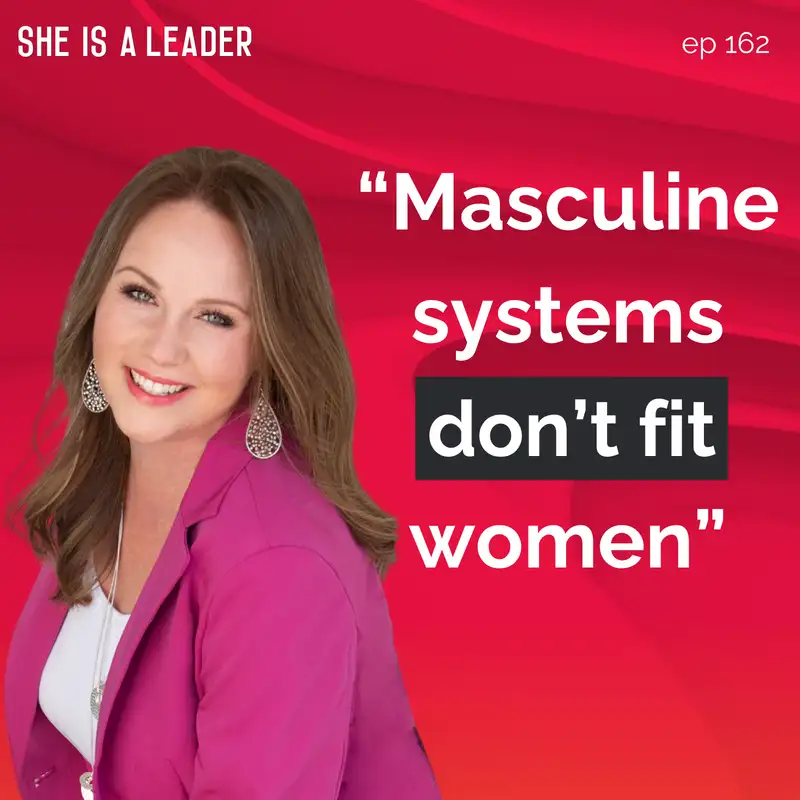
Like, they're so different. And I think one of the problems that happens for women in business is that we, one, we're learning a lot of systems and tools that are built in more of that daily masculine sort of a rhythm. And so we put things on our calendars, we tell ourselves we have to hustle through and keep pushing through our menstrual cycle when maybe all we wanna do is lay on the couch and kind of, ugh, just reprieve a little bit. But we have been told by society, we've been told by our peers, we've been told by our mentors that we just need to keep going.
Yvonne Heimann [00:21:17]:
Just push through.
Renae Fieck [00:21:18]:
It's like push past the excuses, right? It's like it's just an excuse. I had a mentor of mine tell me, Like I could, I noticed these patterns before I actually knew what was happening. I would, you know, go all in. I'd be all in on my business and I'd be feeling like guns a-blazing. And then I would retract and all I would want to do is clean out my inbox folder. I would want to sort everything. I would, you know, doing all these backend detail stuff. And my mentor told me that I was self-sabotaging.
That it was self-sabotage coming in and kicking in. It was fear, like I was getting too big, like it was, my visibility was expanding outward and I was getting too big and I was feeling success. And so that was my body's natural response to like cave back in and keep me small again. And sometimes that is the case, right? Like we definitely look at like nervous system, like when we're expanding our body and fear does kind of come in. But in that moment, that was not what was happening. What was happening was I was going through that luteal phase. And my body was saying, hey, it's time to like actually close in. It's actually time to recharge.
Renae Fieck [00:22:25]:
Maybe let's dot our T's, cross our I's, do some more of this admin time, recuperate, then we can go back out and do these big things. And so I think for me, that was a big realization of recognizing my body just doesn't function the same way as a man's. There are going to be days when I am going to be primed to be on camera with you right now. Like, I, I didn't look at my calendar today, but just like knowing where I'm at, I'm probably close to ovulating, right? So getting on here, communicating and talking to you, other than that one word finding detail at the beginning of mortality versus motil, now I'm gonna say motility, all these mo words, uh, otherwise I'm gonna be able to communicate more effectively versus if I was thick in that luteal phase or even the menstrual phase, full of self-doubt and fear and worry and limiting beliefs, I'd probably be spinning out like, who am I to even show up here on podcasts? Like, I don't have anything valuable to say. What am I going to say? Like, what do people want to hear? Why do people want to hear from me? And when you have all of those things going on in the back of your head, you show up differently. You do. And so it's like helping women just really understand we can do anything, right? I've recorded podcasts, I've done launches, I've done everything thick in the middle of bleeding. We can do it, like we're going to do it.
Renae Fieck [00:23:43]:
But it's a matter of understanding where our bodies are at in all of those different phases and how they're impacting us, that we're not the same. You know, if I'm in the middle of, I've had it happen where like a launch happens in the middle of my menstrual phase. And so knowing that, I'm going to ensure that I'm creating so much more space in my morning before I get on my launch calls. I'm gonna be asking for way more support. I'm gonna be ordering takeout for my whole family all week instead of having to like, you know, be on on that. I'm gonna make sure I'm going to bed on time. All of those other things to really ensure that I'm supporting my body to be able to get to the maximum. And so I think regardless if you change anything in your life, if you sync anything up, if you know, like that's what I love teaching people, but if you can't, sometimes we can't, it's like just the awareness that your body is functioning different, your capacity is different, your brain is functioning different, gives women this permissioning to honor where they're at.
Like, it gives them, it just takes the load off, it takes the pressure off, it just shifts the, the energy significantly.
Yvonne Heimann [00:24:51]:
And it also, it just helps. I'm like, no matter if it's with my team or my partner, um, there is, it's been interesting because I'm definitely also perimenopausal at this point. And my dips have become worse. Um, not in, not in the sense of we could go all crazy with those, but just the combination of perimenopausal, some stresses that are going on right now where it's like, wait a second, let me look really quick. Because it's like I have years of data of my cycle and I'm like, oh yeah, now, now I know why I want kill everybody. Um, hon, call me, call me again tomorrow because right now I want to chop off your head. Um, it just, it just helps also to somewhat have a validation where it's like, you know what, my, my hormones go into a different rhythm than you are. Where it's like, there is, there is a couple of days or there is a week of the month where my eggs are just pissed because I didn't get pregnant.
Yvonne Heimann [00:25:58]:
And which means my whole body is pissed, my mind wants to kill you. It just is what it is. Go away. And just being able to put words to this is something where it's like, I don't use it as an excuse. I don't use it as, oh, you're just hormonal. I'm not going that route. However, I do say, you know what, my hormones are in the basement right now. I am not dealing with anybody.
I'm going to bed. Go screw you all. And just having number one permission, having the words to say, having the understanding for this has helped me a lot because I'm like, honestly, in my 20s, I had no freaking clue. And it just, it was what it, what it is. Um, I'm curious. So for any of my listeners, for any of my women that are recognizing themselves in your story, in my story, in, oh my God, yes, this kind of makes sense. Um, what is one, even just a small step they can take this week at the end of this episode right now to, to really create more space and freedom in their business?
Renae Fieck [00:27:11]:
I mean, I would say the first thing is actually tracking your cycle. There's not a lot of women that actually are, and the women that are are only tracking that period phase. So they maybe know when the period's coming and that's it. But the queen of the whole process is actually ovulation. And so paying attention to what's actually happening in your body, one of the first things that I tell my clients when they start working with me is asking themselves every single day, what does my body need today? Like, what do I need today? And just having that pause and having that moment of connection with yourself, I think, is one of the greatest things that we can do as women. I mean, men too, to, like, if you're a man listening, I think overarching, our world is so fast, it's so noisy, it's so speedy. There's so many different opinions, there's so many different things coming. Like, the, even just like the group thing that's happening, we see it so happening.
Renae Fieck [00:28:04]:
And like the way the algorithms work and the way that politics work and all the different things, it's like we get into these group thinks instead of actually listening into What do I actually need? And what does my body need? And how can I support myself today? So I think one, just tracking your cycle, the different phases. So, you know, putting down every day like, hey, I'm feeling low energy, I'm feeling high energy, or I'm craving chocolate today, or my brain feels like it's out the door and it hasn't been seen in 2 days. Like, what's actually happening for you? I had a client who started doing this and noticed that on day 3, of every single month, she felt the exact same way. And I'm like, that's not coincidental. So now going forward, she knows day 3, nothing goes on the calendar. Like, nobody's there, right? Like, she just, now she can honor that. And the only way that we can able to do that is by actually listening to the body. So tracking your cycle, just asking yourself, like, what am I noticing today? And having that presence with yourself, I think, is has paramount effects in so many different ways.
But in terms of even just being able to use your cycle and use your body in your business, this is step number one for sure.
Yvonne Heimann [00:29:21]:
Yeah. And it's like behind the scenes, I pulled my phone out. It's like at this point, um, I also have the Oura Ring, which tracks, tracks my internal temperature. It's like I can literally tell, I'm like, oh yeah, sweet. I'm ovulating right now. My temperature just drops. And then in, in combination, um, it syncs up to Clue. For me, Clue is my period tracker where they just upgraded their integration, meaning I get so much more data from my Oura Ring in my period tracker.
Because let's be honest, Oura is still working on the whole period thing, um, but it's like I have so much data points in there where I literally just open it up and I'm like, click, click, click. This is how I feel. This is how I feel. Yes, sexy. Yes, I want to screw somebody. No, I don't want I don't want to see a man near me in 6 feet and just being able to easily track all kinds of things. Because my problem originally was, yes, I love data, but I don't want to sit here with pen and paper and try to just write things down every single day. And now it's like, at this point, I have such a nice collection of data at this point, years worth of data where I'm like, yeah, something is off here.
Yvonne Heimann [00:30:37]:
Something is changing, which is how I was able to tell, Yep, I am definitely in perimenopause because these changes are happening. And yeah, it's just, it's really collecting data and just, just whatever, whatever works for you, ladies. If pen and paper next on your nightstand works for you, do that. If it's an app that you trust, do that. Whatever you can do to just really collect the data, because you're gonna see a pattern. You, it's, I've seen the pattern changes in me, and just having that data allows us to do that. And girl, we are planning my launches and stuff around my cycle too, because literally my assistant is like, let me guess, you are on day 5. I'm like, she knows me at this point.
She knows me at this point. And it just, it just helps so much.
Renae Fieck [00:31:31]:
Mine has its own Google Calendar. And so it's integrated into, like, when people book on my, like, book a podcast or booking anything on my schedule, it blocks out certain weeks of my month just automatically. And my assistant knows. She's like, hey, if this person, like, for instance, if she was trying to schedule for you and I to be here today, she would look at my schedule and know. And if it falls in that luteal or menstrual phase, she knows she has to reach out to me and be like, hey, are you okay if I put this on this day? This is the only day that's gonna work for them or whatever it might be, you know? And otherwise she'll try to fit it in on those other days. And it makes a huge difference when your team knows, when you know, when everybody knows like what's happening. And this just goes back into the conversation around like the stigma and the shame that so many of us carry around our cycles that we've been told not to talk about it. We've been told to keep it hidden.
Renae Fieck [00:32:27]:
You know, there's like, centuries of trauma and things that are in the background of that. But even, you know, yesterday was International Women's Day when we're recording this, and I was wanting to make a post so bad and I just didn't have, it was my son's birthday too, and so it was all busy all day. But the fact that like every person on this planet is here because of a menstrual cycle, it's empowering and it's beautiful and it's wonderful. And yet it's the one thing that gets there's so much shame around it. And I think it's just that conversation of like, we need to bring it back and we need to start talking about it. We need to start embracing it. And the more that we do the healing ourselves, the more that we shift it and then change it for the next generation coming. Like I have a 15-year-old daughter and a 10-year-old daughter and watching my conversations with them and like biting my tongue and holding back the things that were just nonchalantly ingrained in me and being present to them and aware of that conversation and aware of that language and like being the one to intentionally stop it and not progress that on to the future generation, I think is incredibly powerful.
But it takes us as women shifting and changing that for us now so that we can then impact the next generation too.
Yvonne Heimann [00:33:46]:
Yeah, and that is, that is one of the goals we have here with the podcast and everything we are doing. And, um, one of the One of the things I really appreciate about this conversation is how you reminded us that leadership doesn't just have to look the way we were taught it should. Sometimes real shift just happens when we slow down enough to question the system we built and whether they're actually supporting the life we want to live. Now, Renae's stories, shows us what can happen when you stop forcing the hustle and start building a business that works with you instead against you. And if this, if this conversation resonated with you, share it with another entrepreneur who might need to hear it. Share it with a husband of a leader that is trying to understand his wife and learning. And as always, thank you for being part of the She is a Leader community. You'll find Renae's information, as you know, in the description.
Thanks so much for joining me, and thanks so much for everybody else tuning in.
Renae Fieck [00:35:01]:
Thank you so much.
Yvonne Heimann [00:35:02]:
Bye, everybody.