Yvonne Heimann [00:00:00]:
Welcome back to She Is a Leader. I'm your host, Yvonne Heiman, and today I am sitting down with Luby and I actually want to start somewhere else. Before diving into who's joining me today, I want to start with something I saw on a Facebook group the other day. Somebody asked, "how did you find your assistant? I just fired my third" and immediately I thought because you probably don't even know who you need and most business owners and entrepreneurs don't when they first start hiring. Neither did I because I've never been taught how to hire and what to pay attention to in the first place. I just hired hoping to solve a problem, hiring an expert, just as I was told. And my guest today, Luby, is actually the perfect person to talk about this with because she is my business manager now, but started with me as my social media manager and assistant. She's been with me through the chaos of 2024, the rebuild in 2025, while I started my digital nomad journey, and all the behind the scenes learning that most people have not even seen on our social media yet.
Yvonne Heimann [00:01:26]:
The funny thing is I didn't even want to hire Luby to begin with. So we are going to talk about what actually made this all work, what changed and what I wish I knew earlier. I learned this the hard way. I kept hiring fast because I wanted relief. I wanted to solve a problem. And then hiring an expert just never seemed to work as planned. So in this episode you are going to hear how to get clear on what really matters before you hire. How to set somebody up to succeed once they are in that seat, and how to build a team structure where you are not all alone carrying the weight of your business on your shoulders.
If you've been tired of starting over with new people, this conversation will help you hire with more confidence and lead with a lot more peace of mind. So let's get into it and hope Luby is going to be comfortable on camera because you are usually behind the camera being pretty much my second voice, my, my everything. I actually often call you my boss, so it's interesting. It's fun having you on camera. Thanks for coming on.
Luby Purnell [00:02:43]:
Thank you for having me on. It's different being like here. I'm not trying to stop because I'm the one that does all the other stuff for the podcast.
Yvonne Heimann [00:02:50]:
So yeah, Luby. Luby is the one all of my guests get to talk to and chat with when timing doesn't align or they need something. She is. My business wouldn't be running without Luby. I don't want to, I don't want to hold our community on the edge. On the edge of their seats for too long. I mentioned that originally I didn't even want to hire you because for everybody listening or watching, Luby is now wife to my video editor. Lucas was the first one that I've worked with.
Oh, my God. I don't even know how long ago. And you were in a crappy situation with your job at that point. And Lucas reached out to me and was like, hey, by the way, if you have need. And I'm like, you guys are in a relationship. That means we have the relationship dynamic and we have the work dynamic. That was my perception of this whole thing of bringing you on. And how was that on your side when I was like, yeah, I'm not so sure about it.
Did Lucas and you talk about that?
Luby Purnell [00:04:00]:
I don't think we really, like, knew that you were skeptical about it, because it was like, hey, I need something. If you. You know, if you have a job position, if you know someone that needs anyone, assistant, social media, whatever. I. I'm available. That was like, hey, by the way, this is happening. And then he was like, yeah, she said she'll do an interview with you or whatever. So it wasn't like.
It wasn't like, we knew that you were skeptical about it. It was like, after you. I was hired, or like, after a month, you're like, hey, yeah, I didn't want to hire you. I'm like, I'm hurt. That hurts.
Yvonne Heimann [00:04:36]:
The interesting thing was it had nothing to do with you. My brain just went straight to, if you two don't work out, we have a problem potentially in the company. I didn't know your communication style. I didn't know your relationship. I didn't know anything of that. Right. So the only thing I saw is, at that point, you are Lucas's girlfriend. And I'm like, yeah, yeah.
Luby Purnell [00:05:00]:
And you didn't. You didn't know me. You didn't really, like, on a personal level, know Lucas. You knew him from, like, past work and stuff, but you weren't. So you're like, who is this stranger? What is. What's going on kind of situation. So I. I completely understand why you were skeptical, why you were like, not sure this is gonna work out, because I think I would have the same reaction.
But I'm glad it did work out.
Yvonne Heimann [00:05:22]:
Oh, God. Yeah. And. Oh, my God. Yes. Yes. Everybody. Everybody should have a Luby in their life.
Just saying. Just saying, find yourself a Luby. And that's exactly why we wanted to bring on the podcast because what in the end happened is I was again in a situation where it's like, oh, my God, something happened with my old team. I need somebody to help. And it was literally a fire burning. I needed somebody. You were there. Okay, let's try this.
What's the worst that can happen? It's just as much on fire as the business is already. It just is what it is. And I don't even know. It's been now, what, two years? Definitely 2024 was a 20. Were you already with a company in 23, too?
Luby Purnell [00:06:05]:
I don't even know 24. It was as. I think it was April of 24, actually, so. As in as in this month. It's two years.
Yvonne Heimann [00:06:13]:
We have an anniversary. And so I wanted to bring you on into this conversation because you've seen it from the other side, right? You've seen it when I brought you on, pretty much just the fires burning. We needed to get things done. Things just needed to be cleaned out to now being a core piece in our hiring process and how it has changed over the years. So I'm like, I gotta get Luby on camera. It's like somehow I. I was able to convince her to come on, to have this conversation. I wanted to start by kind of like in the beginning, right? I had brought you on again, fires burning in the company.
I needed to bring. I needed to publish social media. I needed to get things out. I was the only one. I had just let go of a team of three. And you came in literally, fires burning, drinking from a fire hose, getting things done. Did it feel just as chaotic on your side as me freaking out over here?
Luby Purnell [00:07:14]:
Yes, definitely it did. It was like. Because again, I was coming in from a different, like, position in a place place I didn't want to be in. So it was. I was jumping full in, like, yep, let's make this work. I want to work with Yvi. Let's make it work. So it was.
It was very chaotic. I remember you saying. I think when you were giving permission to your ClickUp workspace, you were like, hey, do you want the view of everything? Like, everything. Do you want to dive deep in? I'm like, yeah, bring it on. Not expecting anything. But, yeah, it was. It was kind of chaotic.
Yvonne Heimann [00:07:46]:
Or did I mention One of our 2026 goals is cleaning up our ClickUp workspace? Because usually clients are always first. Yes, we're working on that. Yes, we're working on that. So with that, when you hear somebody say on Facebook right there, they're looking for help, they're looking for assistance. They've been probably through similar situations as we are. So when you hear I just fired my third assistance assistant, what do you think? And again ladies, in in listening or my community, we are assuming here, I didn't have much of the, of the conversation with the person on Facebook. It's literally just the sentence that triggered this, this idea for this podcast. What do you think? Having seen our chaos and being part of cleaning up our company chaos, what do you think happened behind the scenes when you hear I just fired my third assistant?
Luby Purnell [00:08:46]:
It could be multiple things, but what I think the most accurately would be is just people didn't align. So personalities didn't align. Business and value didn't align with that third person, with the three people. Maybe they were hiring for a different, you know, a person that wasn't fit in that position. But yeah, I think it can be multiple things. But it was either there was multiple fires burning and like the other assistants were like, yep, don't want to deal with that, I'm running away or it was, it was just an alignment issue really with not hiring the right person with the right values with the right personality. And it wasn't really a match, I'd say.
Yvonne Heimann [00:09:27]:
By the way, I did not, I did not prompt Luby on any of her replies. If you have heard me talk about Luby before, there's a reason I call her my boss and she's going to call out my own bullshit too. So none of this is prompted. I'm curious. You talked about what you think is it's an alignment issue, the personality issue. It's a values issue. You didn't say anything about systems in place or SOPs or resources.
Luby Purnell [00:09:59]:
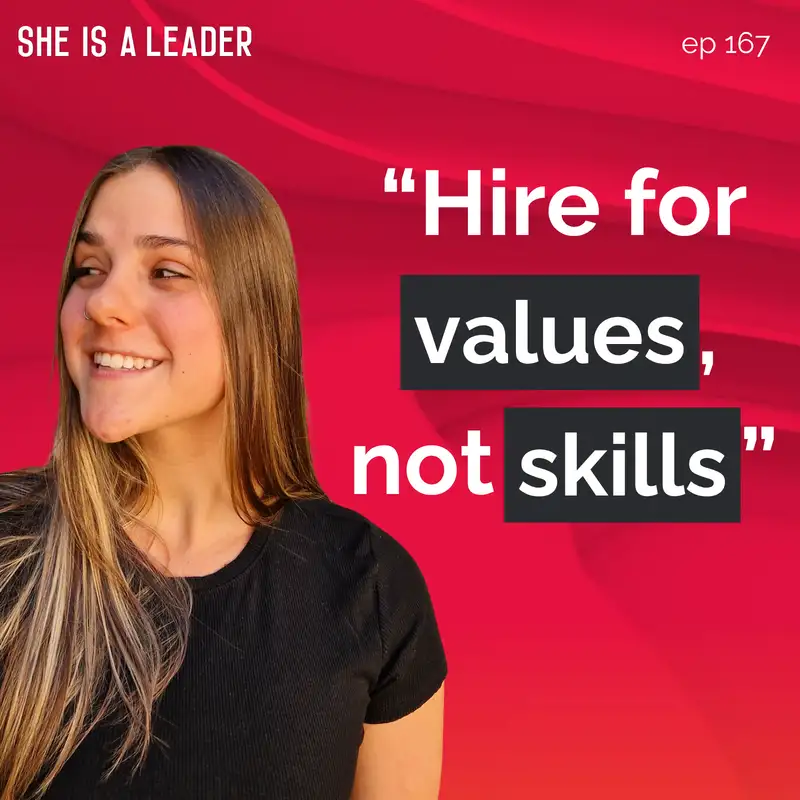
Because if the values aren't aligned, you can't fix it. So you can always write a new SOP. You can always build a new process. You always say that you can always teach the skills. So if it's a skills issue, you can teach it, but if it's a values and a personality and a communication issue, you can't fix it. It's the person's fault. You maybe can fix it with a little bit of training, but it's not an immediate solution as a new system, a new process.
Yvonne Heimann [00:10:24]:
Which is a complete perfect leader and an unplanned to how are we hiring nowadays? Rather than putting it in my own words, I would love to hear it from you and share with our community of going through the last two years and we've hired and tested quite a few people. No, no matter if it's on the ClickUp development side of things. If it's internally, how have, how have we changed our hiring process? What do you think is working? What do we maybe still have to change? No, I didn't trigger her on this one either. I'm like, do we, should we, should we adjust more? We are working on the onboarding process. Everybody listening. But I'm curious is to, in your words, how have we changed our hiring process? What are we actually paying attention to now? What has been working for us? What do you think? Maybe not working for us.
Luby Purnell [00:11:22]:
So we have changed a few different things. First of all is in the application process itself. So when we talk about the job, what the company is and blah, blah, blah, we've added easter eggs, which you know, we find if people are detail oriented and like, for example, one of the ones, one of the questions that we ask is, how do you like your coffee? So if the person in the application says, hey, I like my coffee this way, that way, that way, we know they've read the whole application process. We know, we know they saw values, we know they saw everything. So that's one of the things. The other thing is personality profiles. So they take a little quick test and then they submit all the information so we know if it aligns to what Yvi is, what I am, personality wise, what else? We do have communication and real life situation questions. So to see how the person would handle, I know, an annoying client or something like that as well.
Luby Purnell [00:12:20]:
So yeah, we've really just kind of based it back to what I said before, based it on personality values and communication before anything else. Like, yes, we ask for the resume, yes, we ask for experience or how you would handle a certain situation. But we focus way more on the personality side of things. So, you know, we can always teach someone the skill set for anything they need to learn about. So yeah, that's kind of the tweaks that we've made. But overall I think it has been working well with the people that we found. Like we found some really great people in the process and some not great people in the process. So, yeah, I think for now it's been working.
We've been shifting a few things but it has been working quite nicely.
Yvonne Heimann [00:13:01]:
And for everybody out there, that is like, oh my God, personality profiles, they are not the law. It's not that we say you have to be a manifesting generator or what the heck ever we are, we are going with multiple different personality profiles. We're looking at human design, we're looking at gene keys, which are pretty much the same thing. We are looking at a work type personality. We are looking at Myers Briggs. We are looking at their strength assessment. If you have habit and whatever applic applicants really submit to us. And it's, it's less of a, oh my God, you have to be this personality profile.
Yvonne Heimann [00:13:42]:
No, it's more of a starting to get an un understanding of the person of, okay, what should we expect? How they're communicating, how are they processing information over the years? Fortunately, Luby and I are just two peas in the pot. It's like when I don't send her a morning podcast of three minutes because Yvi has ideas again and is externally processing and we need Luby to clean it up. She is going to send an MIA out for me with that. It really, what I have found for myself is communication for us is number one value. And it doesn't matter what the piece of communication is. We all going to have bad days, we all going to have good days. It's, it's telling us. And I think, I think that's a new thing for a lot of our team members.
Yvonne Heimann [00:14:44]:
I know that some of our new team members were really struggling initially with the, you know what? We all get sick. We all, we all have life happening. We are, we are not working. We are not living to work. We are working to live. All I'm asking from the team is to let us know so we can plan accordingly. Have you had the, the same kind of perception on your end of things? I'm like, I'm still the boss, right? There is still some level of, I don't know, is it. She is the boss.
I don't feel comfortable saying certain things, whatever it is. I'm also German, right. I'm, I'm, I'm a little bit more rough around the edges sometimes in my language.
Luby Purnell [00:15:36]:
Don't make her, do not make her mad.
Yvonne Heimann [00:15:40]:
Yeah, just, just listen. Just listen to the, to the podcast episode where we're talking about that. I fucking cancel the podcast episode. Oh, my God, no. However, I also know that, which then means I hand it off to Luby because Luby is way better at managing those. When I'm in my anger emotion and I just want to punch people. So what has your perception been on us saying, like, just communicate. We just need to know and we manage around it.
How has your perception been on how the team perceives my push on that or our push on that?
Luby Purnell [00:16:22]:
I would say again, as you mentioned, they had a little bit of a hard time at first and I, I completely, you know, I resonate with that because I, in the beginning it was like, should I say that I'm like PMSing or whatever. Should I say that, you know, I'm not having a good day or should I just get stuff done? Because it's always like, no matter what you're doing, you're going to have your 9 to 5, you're going to have your job, you're going to, you know, life happens, but your job can't stop. But yeah, I think it's getting better in a, in a place where people are trusting you more and me as well, more to just share what they are feeling, what they're going through. If you know someone, if anything has happened in their personal life or if they're just having a bad day, they didn't sleep, they didn't, you know, I, I said that today. I was like, hey, I'm tired, did not have a great weekend. I'm just, I'm tired. And you're like, hey, do you want to push the podcast? So it's, it's a genuine, like communication thing where you can just be open with the person, if not with you, but with me. So I think the team has been, after a few little pushbacks, I think they have been adapting well to just trusting us and just saying the truth and, you know, being honest with us and communicative.
So, yeah, I think in general, good.
Yvonne Heimann [00:17:33]:
Where do you think the hesitation is coming from? On I'm like, us both, we are, we are a whole nother level right at this point. Luby, my boss, my assistant, my bestie, my shadow, my. I don't even know. That woman is everything in my business and my personal life. I don't think there is nothing you don't know. We get quite personal at this point. Again, whole nother level to the rest of the team members where there is a reason she's my right hand at this point. Where do you think this hesitation comes from of just saying, I have a fucked up day, I'm not going to be 100% today.
Just letting you know where, where is that hesitation coming from?
Luby Purnell [00:18:20]:
From a few different parts. So one of them is just you being the boss and you being German. So they're like not sure if I want to go to her and say I'm having a bad day. And I think especially because we're all used to having a shitty boss. We're all used to not being able to communicate those, you know, type of feelings and those type of stuff. It's always, again, work, work, work comes before anything else. So I think it comes in a lot of, we're used to not communicating that thing and just keeping quiet and doing our part because we're afraid you're going to tell us off or fire us or whatever it is for not doing our job well. So I think it comes from a very like, constructive way of doing things and having just terrible leaders involved bosses in, you know, in your place that wouldn't understand.
If I'm saying, hey, I'm having a bad day, I'm not going to deliver that. They're like, what do you mean you're not going to deliver that? We have a due date and stuff like that. So I think it comes from an authority position of you being the leader. They're like, can't trust that person with whatever information I have or reasoning I have.
Yvonne Heimann [00:19:23]:
And you, you brought something up, right? We do have due dates, we do have specific points and times where we have to deliver, right? If it is clients, if it is a launch, I can't just push something out for the next three months just because I feel like it. As much as I want to support and, and give my team free rein, we also have commitments. Right. And before I explain why I care so much about the communication, I would love to hear from you if me saying, hey, just let me know when you have a crappy day or if something in your life happens or if you PMSing. Heck, you know, my cycle at this point, you know how my energy goes and my emotions. Do you think having that communication and knowing is hurting us with delivering on deadlines?
Luby Purnell [00:20:24]:
No, not at all.
Yvonne Heimann [00:20:27]:
How come? Because if I give you a day off, we are nowhere closer to delivering for the deadline.
Luby Purnell [00:20:33]:
I'm going to be better on the other day. I'm going to do twice as much on the other day if I take a day off. Like if I'm PMSing today, tomorrow I'm going to be way better. And I know I have all the things from today to do tomorrow, so I'm just going to do them anyways. It's the same thing as taking like a vacation or a week off work. You're going to come back re energized and in a different level that you're going to be able to do the work instead of just being dragging it with your feet. So yeah, I think it's just resetting energy, whatever you need to reset sleep, whatever is missing and then you can just come back even better and do even more than you would have done in that shitty day.
Yvonne Heimann [00:21:07]:
And that right there is exactly why I want this communication. So for everybody listening or watching out there that has been struggling with hiring, this is exactly the reason why I want my team to just let me know what's going on. I don't need the specifics. If you don't feel comfortable saying I'm PMSing right now or some of my. Some of my female friends out there, literally, like, I'm. I'm dying. I am bleeding like a stabbed pig. I cannot function.
My brain is not working. I'm going to spend the whole day either way in a hot bathtub on the couch. I have poor girlfriends that are breaking down once a month that bad. Whatever it is, if people are not comfortable sharing that much to at least say, hey, I am not having a good day, it means, number one, we can plan for it. We are working on resource management. We are not just a team of two at this point. We are a team of what, five, six. The moment I know, the moment Luby knows somebody is not on the top of their game right now, we can pick up, we can look at.
Yvonne Heimann [00:22:22]:
Do we need to move things around? How often do we move things around on the podcast, potentially with solo episodes because we have a big client delivery or because I'm PMSing or because I don't want to talk to a fucking camera, we move things around. Why not do the same thing for the team? Number one, yes, I agree. If I take a day off because I feel like shit, I'm going to be better tomorrow. And number two, the team knowing means we can build around it. Luby has done pretty much anything and everything in the company. I have done pretty much anything and everything in the company. We are building in time to be able to move things around. So there is always a solution.
Yvonne Heimann [00:23:09]:
We just simply need to know. And that's where we have really worked to. To making the team comfortable in team calls. We are joking around that Luby pretty much is my boss. If. If somebody on the team doesn't feel comfortable dealing with a strict German that day, reach out to Luby. So we've been really working around building a company that is flexible, that can move around whatever life is throwing at us, that is supporting the team and not just sucking them dry and taking everything from them. You're just gonna have to join for the second episode on where we talk about how does that really show up in our everyday business? How are we structuring? How are we checking in? How are we frameworking and managing the team to give them the resources to be better at what they do? So make sure you hit that follow and subscribe button.
Wherever you're watching, listening, you know the spiel. And we'll see you in the next episode. Bye, everybody.