Yvonne Heimann [00:00:00]
You are 10, 20 years into a career, you worked hard to build and be there. The title is good, the paycheck is great, and one email from HR, it is all it would take to make it all disappear. You got the degree, you climbed the ladder, you showed up every single day, and somewhere in there, you stopped asking what happens if it's if it just all goes away.
You already know your paycheck isn't the same thing as safety. Stay with me here because what my guest figured out is going to change how you think about that gap. By the end of this episode, you'll know what exactly it looks like to build safety and security that doesn't depend on anyone else's decisions but yours. This is She is a Leader, the podcast for women entrepreneurs who are done burning out trying to do it all alone.
Yvonne Heimann [00:01:00]
I'm Yvi Heimann, and today I'm talking with LaKiesha Tomlin. LaKiesha spent over 20 years in aerospace and engineering, earned her MBA from Yale, and learned to trade while still working full time. She used it to fund sabbaticals, pay for travel, and paid on debt, buying back the kind of flexibility and freedom of choice.
Her job alone might have never been able to give her. Now she's the founder of Thriving Ambition, where she helps high-achieving women build income options alongside demanding careers with a calm and structured approach that skips the, let's just say, bullshit hype completely. Welcome to the show, LaKiesha. I'm happy to have you here.
LaKiesha Tomlin [00:01:48]
Thank you so much for having me. I am excited to be here.
Yvonne Heimann [00:01:54]
Now, with that and reading through your submissions and all the things you've done, my first question is like engineering is in aerospace is all about precision and testing and long timelines and not going into risk, right? We are trying to be the least risk possible. And trading is the complete opposite, at least in my opinion.
You are welcome to tell me I'm completely wrong. What the it's like it's like these complete polar opposites, right? What did you have to unlearn about risk when you started trading? Because I have a feeling it might have been kind of like an experience of okay, we have like years and years of timelines and risk averse and it's all about testing and calculation rather than just, okay, let's do it. Let's run with it and let's see what comes out of it. Where is where I see trading? Everything happens so fast and you kind of like do more than plan. How did that show up for you? What did you have to unlearn about risk?
LaKiesha Tomlin [00:03:00]
Yes, my gosh. So there is so much packed into that question. So first of all, the thing that you talked about when you said there is, you know, risk and everything is moving so fast, first off, the way that I do it, it's not like a commercial you may have seen where this guy is pressing buttons and has a million screens. I don't do that at all. I'm literally just using this laptop and sometimes my phone. So
First off. And like I had that impression as well in the beginning. And I thought that it was like that. And then I go to social media and I see some of that. But then once I actually got into it and started to really understand what was going on in the background, it was nothing like that. So just to give you an example, it's and you talked about this in terms of my career and how in engineering it's precision, it's being risk-averse, it's all these things. I take those same principles into the markets. And for me, it was just more of understanding that anytime I make a decision, like I have to make that decision from a standpoint of risk. Like, how do I make sure that I manage my risk? How do I make sure that I don't you know, just kind of go crazy like I've seen some people do? And, you know, how do I keep myself grounded? So in terms of things of, you know, to unlearn, the first thing I had to unlearn was some of those things. Is that it's not trading or the markets or investing. From my personal experience alone, none of this is financial advice, but from my experience alone, I had to go in and understand what the market was. So I so when I first got started, it was actually investing.
LaKiesha Tomlin [00:04:54]
And that's more of like the long, like the steady, you know, decades, you know, that sort of way. And that's cool. And I still do that, of course. But it was, I was terrified of going into the markets because at that point it was not that long from 2008. And it was just always gloom and doom. And for me, I knew that there were people out there because I'd read a different different stories and saw movies like The Big Short and all these other things.
Where there were people who actually made a lot of money during that time when people were losing, there were people that were gaining. And I was like, well, how is that? So just started to do simple searches online just to understand what is the market. And basically it's just people buying and selling things. Okay, cool. so it just basically just stemmed from that and just me trying to understand what it actually is and how I could potentially make money from this. And it just took me on like this long, you know, at this point, 16 years, actually a little bit more, from the point when I started studying and trying to understand it to now, this journey of just kind of unlearning things about money. So one of those things was and I heard this a lot growing up, and I know a lot of people have heard this as well, but money doesn't grow on trees. yes, that may be actually true, but there are certain types of trees, if you will, that do actually grow money. And one of those monies or one of those trees for me was actually the markets. And then of course, you know, there's a job and there's other things. Like you have to basically give something, you have to plant a seed and water it and nurture it and then watch it grow in order for it to grow into something amazing. And and that's just true of a lot of things in life. So I was first unlearning a lot of things about money.
LaKiesha Tomlin [00:06:44]
And second for me was not like trying to and sit this this took a while, but trying to get over the point of you know being afraid of the markets because I was literally terrified. afraid of the markets and that went away over time just through understanding. So I read so many books. I'm an avid book reader and at that time it was just like I saw these, you know, people, you know, name any, you know, finance personal finance person. They all mentioned investing. And then I had some coworkers that had like this little group where they would meet and they would talk about different investments. Now, now that I understand what they were doing, that's not the right way they were doing it. Basically they were just like trying to find something that, you know, they could put in a little bit and get a lot. And I understand that, but that it's more to it than that. But basically it was just me trying to unlearn a lot of things and try to overcome my own fears in terms of the market. And over time it just it it became this engine that has just worked really well for me and it served me and is still serving me to this day.
Yvonne Heimann [00:07:53]
Now, as the intro and everybody heard already, you used trading to fund your sabbaticals, to bait on your death, and you did it instead of trying to replace your nine to five. You did it on top of it. And we already talked in the green room about it without burning out. And it's like, yes, safety, the freedom of choice to take a sabbatical from your nine to five. Who can do that?
Why did you choose to not go all in? And for everybody listening, why I'm asking that question is we talked in the green room too, so sharing a little bit behind the scenes with you all listening and watching. I'm always somebody that's like, you're gonna just dabble along with your side hustle till the pain.
Of not going all in is big enough and you just have to make it happen. Because that's been my experience with most of my coaching clients that are like, hey, I want to do this thing and it's just not going. And then the moment something in their life happens that forces them to do it, they are finally putting it all in. So again, that's my story, that's my limiting belief. And one of the reasons why I wanted to bring you on because you've lived it.
You've built something and grew something and scaled something and really did it next to your nine nine to five. So why did you make that choice of doing it as a side hustle at rather than going all in?
LaKiesha Tomlin [00:09:30]
Yeah, that's actually a really great question. And in the past I've worked with some people and one of the questions I used to ask people was, why do you want to learn the markets? And their answer was, I want to be able to leave this job and I want to do all these other things. Okay, great. but one of the realities is is that when it comes to the markets, it's not something where, you know, like it's not like you could just watch somebody do it and you try to mimic that and then you have the same success and and especially not consistently. So when it comes to doing something on the side for me, it was just more of something I was interested in. So like I talked about just educating myself and just reading a lot, a lot. and I remember at that time forums was a really big thing and obviously take all those things with a grain of salt, but basically just it what it did is it introduced me to different terms that I didn't know so that I could go look up and figure out what they were actually talking about. So that was one of the benefits there. the other thing was that I mean, I didn't even know enough to like I didn't I didn't have any success at that point, meaning that I was just in research mode. At that point, I didn't invest not one dollar into the market. So, you know, for me to be like, I'm just gonna quit and do this thing, like that.
LaKiesha Tomlin [00:10:53]
That didn't make sense to me. although I have met some people that that do that, more power to you. That wasn't what I was trying to do. So it got to a point where I actually did make my first investment. It was around a thousand dollars. And I had researched the company and all these different things. And over time, I'm talking about like years, it started to look like something. and then I was like, wow, like because it was just something I just invested and I wasn't even paying attention to. And then I looked at it one day, I'm like, wow, okay, this is great, grown like 50%. and then, you know, it's like 100%, et cetera. So I was like, okay, great. Well, what else can I find? And so once I saw that, I was really motivated to really understand what was happening behind the scenes. And I and I invested in another company. and these are well-known companies, but basically another company. And the growth at that time was just insane. I remember investing $5,000 into that company. And then I want to say in like 18 months or so, it doubled. and then I was just like, like wow. So I so what I would do is take, you know, take my initial investment out. actually and it can and it it more than doubled, it actually tripled. So I took my I took my original investment out and I just let it ride. And I was like, okay, well, what else? So and this was over a span of years. At this point, maybe I wanna say it was like six, seven years. So it wasn't something that was instant, just because I now looking back, I wish I would have, you know, dug a little bit deeper at that time. But you know, hindsight's 2020, but basically it was something that was just kind of on the side. And me, I felt comfortable investing at first $1,000, then $5,000 because of the full-time job. And that's the other thing too. when when you have some sort of cushion, whether it be savings or a full time job.
LaKiesha Tomlin [00:12:43]
then it does provide you with a bit of confidence in terms of like I'm gonna figure this thing out and if I lose money, then you know the job is just going to cover whatever losses I had. And and that's in, you know, in the investing part, there were, you know, hardly any losses. Like like not really. I just had to wait. 'cause these are really strong companies. But later, there were some there were some losses. So then I had to think differently and I had to really understand risk management and how to basically protect the money that I had and get rid of the losers, so to speak, in my portfolio. And I mean, that's something that I still do to this day. There's actually a company I was looking at yesterday. I'm like, this company's gotta go. because it's not it's not it's not that it's down so much. It's like maybe like five percent, but I keep seeing it do this when other companies are doing this. And I'm like, I I gotta move that money. So so it's not like it's you know, like a hundred percent loss or anything. But anyway, going back to, you know, the job piece, I I believe that it actually makes someone a better investor that if they hold on to the job, learn the skill, get some sort of success, and then over time be able to repeat that on their own, not relying on, you know, whatever they may be seeing in the news or online, being able to r rely on themselves.
LaKiesha Tomlin [00:14:10]
Then maybe you know, that could be an opportunity for them to do something different if they choose to. but for me, it took me a long time just because I wasn't like I wasn't I s I just saw it as something on the side. I wasn't looking at this as, I can use this money to take a sabbatical. It wasn't until years later, like six years later, when I mer made my first investment, where I was looking at the market to take a sabbatical, mainly because I. I'd read some book. This woman had a really good job and she had some side hustles. The market wasn't one of them, but it was like coaching, speaking, and some other things like that. And she was able to take the money from her day job and the money from her side hustles to be able to have enough money to live on for something like two years. And she she took a sabbatical and and she hasn't been back since. Like, good for her. So, you know, I I saw what was possible, and for me, that mechanism, in addition to my full time job, was the markets.
Yvonne Heimann [00:15:10]
And I love this this freedom of choice, right? It doesn't mean, my God, you have to pay off your debt, or you have to take a sabbatical, or it's all for safety. It's ha having the financial literacy, having the money in the account is to me, number one, it's power. Number two, it's again the freedom of choice.
For you to do what you want to do because your bank account is not making the decision of what you can do. How else do you create freedom in your life and your business? What else do you do that allows you to build like a self-sustainable business and do the things you want to do?
LaKiesha Tomlin [00:15:58]
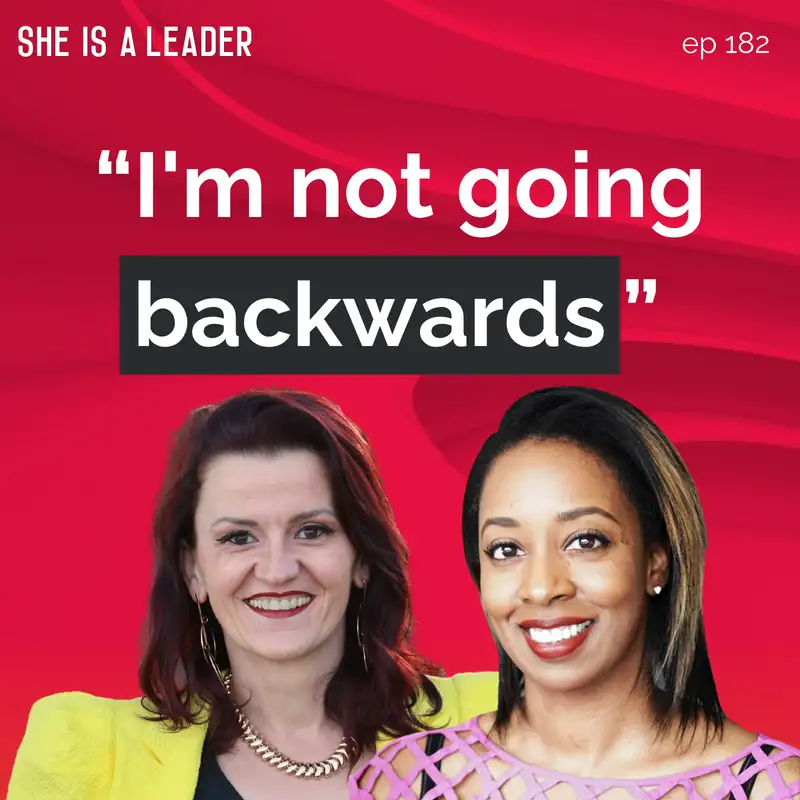
Yeah, that's a really good question. And like this is a very interesting time that we're in right now. So I Yeah, so it's like I've had years of just just thinking about, you know, having like this problem or like, you know, having like this additional income or this, you know, bag of money, whatever you want to call it, off to the side. And because I've been thinking about that for years and stacking some money, actually it got to a point last year where I was laid off for my job. So I was in a senior leadership position and I was laid off. But I mean, of course I was sad, but I had this, you know, this amount of money that was in multiple accounts that was almost equivalent to my annual salary in that job. so you know, having that skill set and having, you know, pretty much this this other engine, and then the business I do have a business as well. So I I was getting new customers and stuff like that. So all these things contributed to just having some options in terms of not just taking the first thing that was offered to me. Mainly because I remember at that time there was I was on a phone call with this guy and he was saying, Hey, we're opening up this other position in my department. Do you want it? And I said, no, because it was below the level that I was currently at. And I didn't want to go backwards. It's like I had worked my ass off to get here. I'm not going backwards.
So it just, you know, just having, you know, just having those numbers and, you know, having those different accounts and, you know, it just afforded me the option of not taking something that was lesser. Now I understand that there there are people in different situations and you gotta do what you gotta do. Like I totally get that. but for me, it just didn't didn't make sense.
So and I'm glad that I I didn't take that. And then there's been some other opportunities where, you know, maybe the compensation wasn't there or the scope of the work wasn't there, et cetera. And I've just passed on it because it's like, you know, I'm I've built, you know, this this system, this engine and this knowledge, in order to be able to still make money from the markets and not have to put more money in. So just what's this like three weeks now?
LaKiesha Tomlin [00:18:10]
I was able to take some profits from some investments that I made last year and take that and pay off some debt and then be able to pull some money out of that account so I can pay, you know, some more bills. But basically, you know, I had this money making money inside of these couple of accounts, and you know, and that's just that's just what I've been doing. So even this past week, you know, I've been taking some of that money, making more money.
And you know, next or actually in two weeks I will, you know, pay my credit card bills and stuff like that. You know, just just like little, just like little things, but it didn't start that way. It started with that thousand dollars and the willingness to learn, continuing with it. And just basically one of the biggest things is just managing my risk, not going crazy in the markets and just, you know, taking amounts that I felt comfortable with, investing in certain companies and just, you know, letting letting that grow as the company grew and not just trying to pick the cheapest thing, but pick the best thing. So a lot of my investing, I guess, strategy, if you will, or at least mindset definitely comes from Warren Buffett. I mean, he's, you know, amazing, of course. And, you know, even though he's retired from Berkshire Hathaway, I mean he still has I mean, there's books and so many other things that he's written, other people have written about him that we could pull those lessons from. And those were some of the some of the best books that I've read, just basically just understanding his philosophy. And it was one thing that he said in one of these books. I've read at least 10 at this point, but it was basically like he's not trying to find the needle in the haystack. He's trying to find the stack. So basically he's not trying to find like that hidden company that no one knows of. He's looking at these investing class companies and making a decision as to whether or not it's a good investment for him. So that's kind of how I look at things.
Yvonne Heimann [00:20:05]
So just to make sure I'm completely hearing you right, and we we talked through the episode multiple times about this. Public perception is always like, my God, trading, you have this whole Wall Street picture in mind with screaming people and we are selling and we are buying and all that shit going on, right?
What you are saying is, yes, that happens too, but that's the high risk trading. That's the one when you have way too much gambling money left over that you don't care. Go have fun. You are more in the established and like let's be honest, bank accounts in the states don't pay you. They don't. Even German bank accounts don't pay you anymore. So rather than shoving the cash under your mattress, which my grandma might still be doing, you are using trading as a sense of getting money back, of making money, rather than having it sitting in a bank account. And you're doing it in a way that is more predictable, that is more sustainable.
That might not be the my god, you are making 300% profit within 24 hours marketing bullshit. We see everywhere. Did I just curse again? Yes, I did. It is it is a long-term strategy. It's it's a financial commitment and strategy that is not an overnight marketing spiel. I'm I'm coming back to marketing and social media of seven figures in seven days.
It's a strategic it's a strategic approach. It's a we are doing this for the long term, not for overnight, and with that you are also taking the risk down. Am I hearing this right?
LaKiesha Tomlin [00:22:00]
Yeah, yeah, a big portion of that. Absolutely. So for me, it's it's not, you know, these really big figures. Like it's literally just small, small amounts that add up. And I've mentioned that a whole bunch of times because people see these things on social media and they see somebody, you know, making seven figures in seven days or whatever. And and that is possible for traders, but it's not the norm. It really is not the norm. A lot of those people that I see, first off, they don't really say it in that way. First off. second, they have like ten, at least five, but most of them have ten plus years in the game in terms of investing and trading and just like really understanding the markets. A lot of them, they're not chasing like the tiny thing. Like they, in a sense, you know, have the same mindset as Warren Buffett. They pick the best in class and they're they're focusing their attention there. They're not in 20 different directions. They're really focused and and we're actually hyper focused and concentrated because I know one person in particular where they are they've been trading the same market. And and just to be clear, like a market is like let's let's just take for example like the company Apple, not financial advice, but Apple offers shares and that is the market.
So the Apple market and then there's a whole bunch of other markets. There's literally thousands, but basically they focus. And it's not, you know, all these crazy things that are presented on social media. It really does take time to really understand your craft and to really understand the way that the market moves and all the like news in terms of like any decisions that the government may make or whatever. Like it really takes a lot of time to really understand those things and the thing about it though is like once you get it, you can't unsee it. You can't, you know, like for me, I see things and I anticipate certain things. So for instance, I was trading this one market and I saw that it was doing stuff, but I waited weeks before I made a move because I knew exactly what I was looking for. And once I waited, then it became very lucrative because I I saw what I was looking for and I took the action and then it went in the direction. It took some time, but it went in the direction that I wanted it to go in and you know, I was able to use that money to be able to do some other things. So yes, I don't wanna belabor that, but yeah, it's it's not this like crazy, crazy thing that's on social media. It's it's a lot more it can be a lot more chill than I think a lot of people make it out to be.
Yvonne Heimann [00:24:40]
And that's that's exactly why I wanted to bring you on. Because so much I'm seeing lately is really this public perception and what social media and just marketing has told us because we've been so trained to go for the extremes. And then when you go into the everyday life and into the real story, it's it's different. It's like we always see the outliers because they get the views. And real life and everyday stuff really isn't isn't usually quite as crazy as it's been made out to be. Now, if somebody is listening right now, one of my women, they are still dependent on one paycheck and they're like, Yes, I hear you. I get it. Where do I start? Where what's the one thing you want a woman that's listening or watching right now that's like, okay, I hear you all. I can do this maybe. What's the one thing you want her to do today? Or at least this week.
LaKiesha Tomlin [00:25:50]
Yeah, so I'll well yeah, yeah. No, that totally makes sense. And I'll just speak from my own perspective. So for me, let's just take like day one, you know, working, getting a paycheck, okay, cool. But then it got to a point where I actually had a little bit of money to put into savings. So every two weeks I automated my savings. I can't remember exactly what it was, but it wasn't a whole lot. Let's just say it was a hundred bucks every two weeks.
And then as I made more money, then I would increase that. But during that time, I was trying to understand how to make my money work for me. And that's when I was looking at personal finance books. And then, like I said, all of those books talked about investing. They would mention it, but they didn't really say how to do it. so I started to go outside of that and started reading books on investing, like long-term investing. That is where I started.
And as I was learning, I was letting that money in my savings account accumulate. And then that's when I got to the point where I was able to take my first thousand dollars and put it into a company that I had researched. And it wasn't anything extensive in turn in terms of researching. I had been looking at this company for about a year or so. And I saw that like it was going up. I'm like, okay, cool. Like I love the company. I love the products.
Let me put some money in. And that's and that's what I did. And I told myself, if I lost a hundred percent of this thousand dollars, I will be cool with that. because I felt like I did my due diligence up front in order to be able to make a decision that I was comfortable in. And then just like letting it sit for years, it it doubled and tripled and you know, now it's even more. But, you know, just just let it sit there. And then over time I've been able to like invest in other companies. So going back to the beginning, it's first paying yourself first through your paycheck. And that for me looked like automated or automating my savings. And then doing the other stuff I just talked about.
Yvonne Heimann [00:27:50]
So you see, starting is actually quite simple. It doesn't have to be this big thing of, my God, we need to do it all right away. And I love how through your whole story there is just a calm. There is none of the, again, we started, we started the episode with this, right? There is none of the stress and the hustle and the craziness and the risk. It doesn't have to. And looking back at this.
Your career was never real really going to hand you that safety and security. And you just simply stopped waiting and build your own safety net. The kind that funded you sabbaticals, paid for your travel, erased debt, got you the freedom of choice to say no to job offers that simply don't align with you. And
Let's you choose your own life instead of managing somebody else's plan for it. So for anybody listening or watching, if you know a woman who looks successful on paper and is still scared of what happens if her job disappears or she might not get to live the life she wants to live, go send her this episode. Things are possible, there is a place for her out there, there is ways to do so.
Go send her the episode. She needs to hear it today, that she does have possibilities. LaKiesha, thanks so much for joining me and everybody else, I'll see you in the next episode. Bye, everybody.
LaKiesha Tomlin [00:29:20]
Thank you so much for having me.
Yvonne Heimann [00:29:25]
Thanks so much for coming on. It's like finances is one of those topics that's near and dear to my heart. So thank you for joining me.