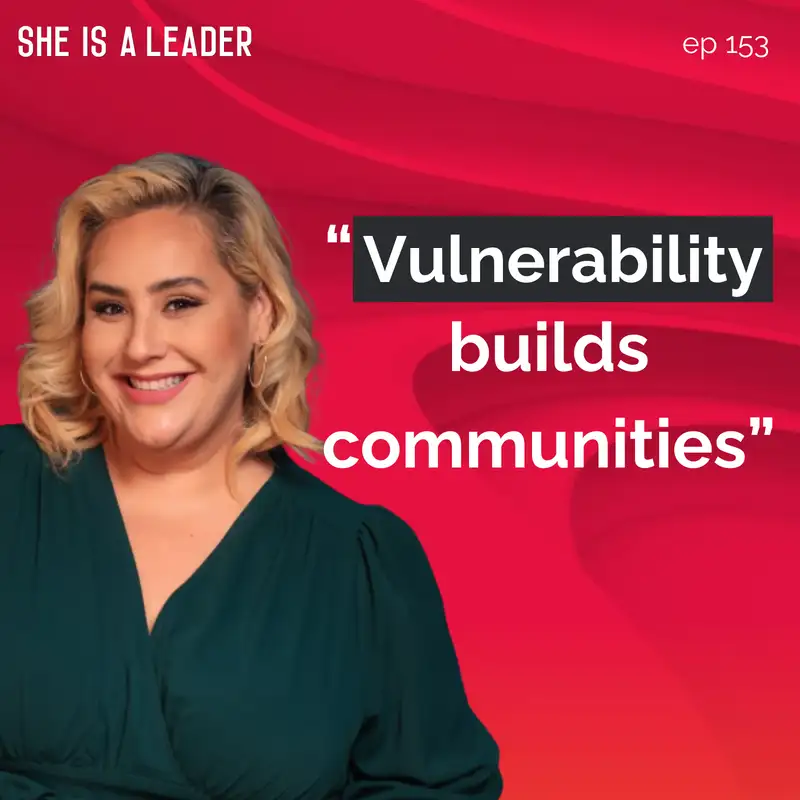
Claudia Sandoval [00:00:00]:
We are live.
Yvonne Heimann [00:00:04]:
This is. Oh, my God. Oh, my. To my editor and everybody watching, we are not taking this out because this is Chef Claudia. I swear to you guys. This is how she is online. This is how she is in person. This is why I am so freaking excited to have you on the podcast.
Yvonne Heimann [00:00:27]:
Now, after this energetic start of the podcast, let me introduce you to this ball of energy, this gorgeous, loving face that you see already on the screen, because, oh, my God, girls, ladies, anybody out there, you have to follow her.
If you are a passionate entrepreneur, if you have a vision, if you care about values and impact, you gotta follow Chef Claudia now on the official side of things. So I don't just throw you in there with yes, you have to follow her, which you have to. Where the original intro, which I usually have for the podcast for you here, just to introduce you to Claudia is like, she completely threw me here for it. So Yvi goes back into professional intro mode. You know what? Fuck the goddamn intro. Fuck the goddamn intro. I'm handing this off to my. Oh, my God, my bestie.
This is going out with her. You are going to go home sore. I love your laugh. I love your energy. So you know what?
Claudia Sandoval [00:01:39]:
For the record, she means sore from laughing. Okay? Let's just make that clear.
Yvonne Heimann [00:01:50]:
I freaking love you.
You know what? I'm just gonna sit back, I'm just gonna shut my mouth because Claudia can do this way better. Go introduce yourself. Tell people why you are so freaking amazing and why I love you.
Claudia Sandoval [00:02:04]:
Yeah. Listen, for those of you who don't know who I am, I am Claudia Sandoval. I won MasterChef season 6. Yes. The one with Gordon Ramsay on Fox. And then I went on to become a judge on MasterChef Latinos, MasterChef Latino and Telemundo and Estrella TD, which is Spanish language television networks in the United States. And then I went on to become a judge on about 18 different television shows up at this point. I've executive produced, hosted, and created several other formats as well, for both television and digital.
I'm really, really, really, really just really in a great place right now because I feel like after having 10 years as that as my background, I feel like in the past two years, I've really gone through this kind of self discovery of transitioning my career from who I was as this chef, and really an amalgamation of that with who I was before I won MasterChef. Because I think sometimes there is a lot that happens. But in short, that is my bio.
That's why she includes me in this. So yeah.
Yvonne Heimann [00:03:17]:
The interesting thing is that that is your professional bio. So next to that is also your single mom. You have written books, you are involved with a lot of non profits. Ones that comes to mind is feeding San Diego. It's like I'm literally getting goosebumps. You are such an inspiration to me on the daily basis because how you show up, it's like so often you see this, this public face on social media and then you meet people and it's like, what the heck just happened? You are online just as much as you are in person. This bald personality, this love for everybody and everything, the fight to make this world a better place. And I know that's not always easy.
Yvonne Heimann [00:04:13]:
I know there's a lot of happening behind the scenes. I know you have, you have put a lot of work into yourself, into your business. If I remember right, you were going to open up a restaurant right before the pandemic and the, the pandemic hit and banks were like, we out here, peace. And you adjusted so nicely with pop ups and your local community and always bringing the, the Latina kitchen into my house. I'm like, every time I see your goodies, I'm like, I can I move in? I just want to move in. I just want to surround myself with your energy. Now. It's been interesting following you as of late because you have shared more, you have opened up more conversations and sharing about your journey, sharing about some of the health challenges that come with it.
Yvonne Heimann [00:05:14]:
I know having been in hospitality before as a woman in the kitchen, it's not always the easiest to do either. So looking at all of that and looking at some of the not so nice responses that you get that I get, being so public with our opinion and our stories, how do you stay centered? How do you take care of yourself with heck, I've seen some of the comments where I'm like, I just want to punch people in the face. It's like, you really think just because there's a screen in between you, we stop being humans. What are you doing to take care of yourself in those situations?
Claudia Sandoval [00:05:53]:
Well, I mean, there's. I think that's a twofold question, right? I think on one, on one hand there is this noise that you constantly have, right? And for a lot of us it's not even, you know, it's not even just, it's not even just from the exteriors, it's from in the interior. Right. It's a lot of negative self talk because you do have this noise coming in from the outside, and then from the inside, you start to believe some of the things that you hear. But maybe also there's a little imposter syndrome in there. Maybe there's like a little bit of, like, negative self talk where you're like, well, maybe they're right. Why should I be on television if I'm plus size? What? You know, why. Why.
Claudia Sandoval [00:06:35]:
Why am I on television if, you know, if there are so many other more talented people out there? And. And so I think you're. You're very right. I think that when I try to think about how I kind of center myself and bring myself back to myself, because really, that's what it is, right? I think what has really helped me is, number one, I am really, really big on my ground staying grounded with my family. My family. I know sounds really silly, but I always joke that anytime my head starts to get big enough, my family just comes over and goes, boop. Leave it to a Mexican or Latino family to just bring, you know, knock you a little couple steps down. But I also think that I have really incredible friends, and when I start some of the negative talk or I start to really get.
Claudia Sandoval [00:07:29]:
Go into kind of isolation, because that's what I do, right? I start to, like, isolate, and I'm like, what's happening? And these are all negative self patterns, right? That don't help me. So what I will always end up doing is somehow I'll, like, mention to a friend or my cousin's a really big anchor in my life. I'll reach out to my cousin Esme, and I'll be like, hey, can you believe that this person said this, this, and that? And she's like, yeah, and what did they do with their day? Did they do the seven jobs that you do in one day? You know, did they change anyone's life yesterday? Did they, in fact, did they change anyone's life? And then when I start to be a little bit more objective, right? Because sometimes when you're kind of stuck in that tunnel of just only hearing and seeing what these people are saying, it's really easy to just go, keep going down that rabbit hole. But when. When you take a step back and you're a little bit more aware of everything, and in the grand scheme of things, to your point, there are so many other things that are happening in the world right now. There are so many devastating and wonderful things, too, right? And so when you. When you step back and you realize that you are just a speck on this rock in the middle of the universe, you know, these things aren't as big. And in fact, yesterday I was listening to a friend, Gina, the Latina.
Claudia Sandoval [00:08:46]:
She's a radio host, a very famous radio host from here in Los Angeles. And she was kind of talking about how sometimes we will consume ourselves with the meniality of everything that's happening through our day. Right? It becomes so loud. But when you think about it, in the grand scheme of your life, will that email that that person sent, will that passive aggressive comment that friend made, will that, you know, person who was trying to harass you on the Internet make any difference? And the truth is no. And so for me, I think perspective is a big deal. I'm a big philosophy degree. I hold a degree in philosophy, so I think perspective is everything. And so I always encourage people to step back and to think about, will this matter in the grand scheme of things? And if it doesn't matter, and if it won't matter kind of like in the next week, then we shouldn't be worried about it.
Right? And the other thing I think is, along with that self doubt is self assuredness, kind of. This is what I mean about it being a little bit twofold. I think one of the things that I've been really grateful about in my life, people say, like, you come into a room and like, your energy is just like, you have arrived. Right? I've always had that. And I think that I feel like in person, I always joke, I'm like, I wish one of these people would come up to me and say that in person.
Yvonne Heimann [00:10:06]:
They probably wouldn't. They couldn't even. I'm like, I'm sorry. There is no way when you step into a room, when you greet somebody, there is no way. No matter how shitty my day was, no matter what the heck was burning down, I don't care what happened five minutes ago or an hour ago. You step into a room and you say hi to me, and I cannot do anything but be happy. That's the energy you always carry. And it's like.
And I've seen it with others. I've seen it at events. I've seen it, oh, my God, I need to make tamales again for everybody wondering what the heck I'm talking about. I joined one of Chef Claudia's tamales classes, and suddenly we all became friends. I came with a friend, and suddenly I left with 15 more. And that's just how I see you show up every single time, in every single moment. And I'm like, yeah, freaking bully. Come on, let's go have a drink.
Because no matter how shitty your day was right now, no matter the reason why you just attacked me the moment you look Claudia in the face, there is no ability, there is no possibility of any hate or stress or anything being lacked.
Claudia Sandoval [00:11:24]:
Yeah, yeah, yeah. And I think that that has a lot to do just walking into the room and knowing who you are, right? My mom will joke sometimes to me and say, like, aren't you embarrassed about your upbringing and how we grew up? And, you know, you share these stories of, like, you know, food insecurity and not having enough to eat and all of these things. Like, aren't you embarrassed of that? And I'm like, no, I am not embarrassed, because I am like a book. And in this amazing, incredible book, there are sad parts to it. There are textured parts to it. There is learning, there is growth. And on top of that, there is so much success. And it is thanks to that success that I can tell these stories of overcoming all of these incredible trials and tribulations that have been my life.
Claudia Sandoval [00:12:09]:
Those moments do not define my story. They do not define my future success, nor do they define who I am as a person. On the contrary, they are parts of me, a collective part that creates this amazing story and amazing, you know, hopefully, this amazing legacy that I will leave for my daughter and my friends and anyone who knew me, to tell about how having security in yourself and knowing who you are, including all of your textured parts, makes you you and makes you the reason why people want to love you and want to spend time with you and want to invite you on their podcasts and want to, you know, spend time with you. And why a plus size Latina is okay being on television, right? Because there are so many more of us than there are not, right? And people want that. Nobody is perfect. And I think the sooner that we start to accept that, then we start to accept everyone around us and realize that we are all a product of all of our experiences. And it is all about perspective and how we view them. And if we gave anyone as if we gave ourselves, in fact, as much grace as we give other people, my God, the world would change, I think.
Yvonne Heimann [00:13:22]:
Wouldn't that be something? It's like this. That's. That's such an interesting piece. And it's such an interesting story, right? Because often enough we see. We see the magic in other people. We see the love in them, we see the possibilities in them. And more often than not, we don't see the same level in ourselves where it took me a while to. To be able to receive compliments to begin with and to be like, okay, I had a fucking shitty day.
Can somebody please just tell me that I'm a good person, that I'm doing the right thing, that I'm amazing at what I do? Because right now, imposter symptom is hitting left and right and just being in those situations where I see the magic in my clients and my friends and everybody else. And then I have days where I'm like, why me? Why. Why am I the one doing the things? And why should I have a voice? And it took me a lot. And it took me a lot of work to in general, receive compliments when I get them, but also be like, okay, I need somebody to polish my ego, tell me that I'm doing the right thing and being able to receive it and hear it. And I think that's such a female and minority issue in general. Because we grow up with the story of we are not enough. We are not enough to be able to be a US Immigrant. We are not enough to have a voice in what the fuck ever is happening right now.
Yvonne Heimann [00:15:02]:
We are always not enough or just too much. That seems to be a lot of the conversations and a lot of the voices that have been in my past where I'm hoping with social media, with people like you, that with information and stories being so easily accessible nowadays that we can reframe that. We can reprogram all of those neurons that have been talking this bullshit and reframe that and change the story. And watching you as part of this has been just, just so amazing with your substack, with your stories, with sharing the. You've not always been here. Yeah, you've went through food insecurity. You, your parents, family had. Had to work hard to get where you are right now.
I'm like, I remember you being exhausted and working hours and hours and hours. You're not so little one going off to college, all of the emotions that comes with it, being a single mom, all the things. And just watching you go through that with grace, it's not always easy. It never really is easy when you were in it, but you never lost your compassion for everybody else. You always walked through this with grace. And I would love to see more people handling fear and anxiety like you have.
Claudia Sandoval [00:16:37]:
You know, it's really interesting. I think my word for 2026 is storytelling. And when I started to. Across the last two years, as you mentioned, when my daughter left for university, you know, I went through a really, really dark time not only because I was going through some really crazy health scares that I talk about on my substack, of course. I mean, I very literally almost died in Mexico City because of blood loss. And then I had surgery and I had to recover and I couldn't walk and all of these things were happening and I just. That was such a dark time because not only was I physically not okay, I was emotionally not okay. So imagine if your mind isn't in the right place, how is your body going to recover? It's not, right? And so my recovery that should have taken two months took nearly a year.
Claudia Sandoval [00:17:33]:
And honestly it's been about two years and now I feel like my knees are finally doing better. But you know, I'm sure a lot of people have heard about these books like the Body Keeps Score and all these things. And I truly think that when that happened, it was my body saying enough, right? I have gone through 10 years and this is self admittedly, this is going to be something that I'm going to be talking about in my substack soon. I have gone through the last 10 years and I've just been going through the moves, I've been going through the motions. I haven't even been celebrating my own success because. Because I've lived in this constant fight or flight. I couldn't take the moment to be like, yay me, right? So I was constantly going and then the next job and the next gig and the next and the next show. And I think that that's why I've been able to collect such a wide array of accomplishments.
Claudia Sandoval [00:18:25]:
The reason why I bring that up is that after the two years and after spending a lot of time in therapy and doing hypnosis and past life regressions and, you know, sound healings and wellness journeys and losing 65 pounds and more because it was me trying to re establish my sleep schedules, get my mind and my body in a good symbiotic relationship where it was, it was healthy, period. It wasn't even about let me lose weight because I feel like I need to. It was more of like, I need to find a. I need to find nourishment that nourishes my body and my mind in such a way that I am not continuously spiraling and just working, working, working, working. And once I gave myself the opportunity to pause, all of the grief that I have not processed in my 42 years of life came and I cried. And I don't think I've cried as much as I can say ever. Like, I cannot believe the amount of crying that I did. I think I cried everything that I haven't cried in my whole life in about a year.
Claudia Sandoval [00:19:26]:
And that had to do with, you know, my daughter being an adult now and being in university and finding this vacuum of space, having been a 15, you know, a single mom for 15 years, all of that was happening. And all of it felt so compounding, and all of it felt so hard. But then through that came this understanding that the reason why I was doing all of this was because I wanted to continue to tell stories. Because even if I'm sharing my story and my trial and tribulation, that is still a story that is happening every day out in this world. Whether it is a story about my immigrant parents and how much we struggled because my mom and my dad got married legally, but the immigration system is so broken in the United States that it took years for him to get his papers. We won't get there. I don't want to get into the politics of it. My point is people try to do it the right way all the time, and it never works.
Claudia Sandoval [00:20:27]:
And so whether it's that story, whether it's the story of me nearly dying because of a woman menstrual cycle thing, whether it was dealing with cancer, whether it was dealing with my daughter, whether it was, you know, dealing with my divorce and domestic violence, all of those stories are stories that resonate with my community. And when I say community, I mean everyone. Everyone in the world. I don't care if you're Republican. I don't care if you're Democrat. I don't care if you believe in this religion or that religion. If you come from, you know, Uganda, or whether you come from the Netherlands or whether you come from Mexico, it doesn't matter. You are my community.
Claudia Sandoval [00:21:04]:
Because we are a collective humanity, right? And through that community of humanity, we all share all of these different textured parts of our lives. Nobody's life is ever linear where you go to work every day and you get up and you go and like, don't get me wrong. And if you. And if that is you, and if you are just that lucky person, congratulations, you have won the lottery. But, you know, there's like, just yesterday I had to go get my brakes fixed because out of nowhere I lost a break in the middle of going, I live at the top of a hill, guys. I lost a break. No. Yes.
So, like, just emergencies like that happen, and they happen to people all the time. All the time.
Yvonne Heimann [00:21:42]:
It's life.
Claudia Sandoval [00:21:43]:
It's life. And so I think that the results of all of the last two years of my growth and my change and everything. When if you google me and you and you look me up, I'll have red hair, right? That was my iconic kind of look. And what I realized was there started to be this disassociation between Chef Claudia and Claudia, right? Chef Claudia was the brand. And instead I was having this kind of this disassociation with my own self because I became this bobblehead that was always Chef Claudia. And in order for me to shed that and go back to being myself and to find myself through this journey that I was on, rediscovery of dealing with trauma finally, of giving grace to people, I found that through that storytelling, you even find more and more compassion. And I know that that sounds silly, but when you realize your own difficulties and when you have that self awareness to say, if I'm not perfect and this is who I am as a result of the multitudes of trauma and the multitudes of PTSD that I have, the, because of these micro things that have happened throughout my life, then you realize that that is everyone's truth. It's your parents truths, right? And then you can forgive your parents for all the things that they were lacking because they didn't have the tools that we now have, including mental health professionals, including the removal or the reduction of stigma.
Claudia Sandoval [00:23:12]:
Not removal, the reduction of stigma around mental health. They didn't have ways to talk to other people, to hear, hey, your ADD isn't crazy. There's more of us that have it than you think. And oh, by the way, that thing that you think is really quirky about yourself, I have that too. And then you have thousands of people going, hey, me too. And then you realize you're not alone in the world, right? And so I think that when it comes down to it, my goal is storytelling. You know, it's my appetizer to bring you to the table, right? And when I bring you to the table, then we have a whole multi course meal of vulnerabilities, connectedness, and of us sharing why we should be giving ourselves that grace. Because when you give yourself that grace, that well of compassion continues to grow.
Claudia Sandoval [00:23:58]:
And you realize that every single person is out there is a result of what they have been taught, of what they have been told. Even as women, even as men, some of our men are really struggling with their, with the way that they, you know, we keep hearing about this, you know, male loneliness epidemic. Don't get me wrong, I understand why some people are like, they're not lonely, there, that's a set of results of their own making. I get it. But guess what? They're still lonely and they still need love, and they are still our counterparts. And at the end of the day, if we don't show compassion to our men, then what will our men become? Right? We, you know, anyway, we can go down.
Yvonne Heimann [00:24:36]:
That's one. That's one of the conversations that I have a lot behind the scenes, too. I'm like, as you know, yes, this podcast is female focus because I want to bring female voices up there. When you look at the podcast markets, it's so many old white dudes. I love enough of them, don't get me wrong. But it's finding a balance. It's having these conversations and putting a spotlight on voices that are often not getting as far as others. And I have the conversations behind the scenes where we have good men.
Don't get me wrong, we also have good men that have those conversations that are doing the work and that are getting caught up in this blank statement of old white guys. Let's be honest. I'm like, we are humans. We like to put things in boxes because that's how our human brain works. And yes, as much as the podcast is female focused, we want to have those conversations. We want to bring this in. And it comes back around to some of the work that I have done. Early on, when I started my mental health and my boundaries journey of I was in such a situation of everybody or my partner and specifically should know what I want.
Yvonne Heimann [00:25:55]:
They can't fucking read mind. Set your boundaries, set your expectations, get over your good girl and tell people what you want and what, what you need. And I think that happens on both sides too, where in this realm of fighting the patriarchy, which, I mean, in a sense of just putting a name to it and this big epidemic, a lot of men have been caught up in between and not being able to trust anymore to say, this is what I want, this is what I need. I am one of the good guys. They have gotten smacked so much over the head that I like the moment I say something, I'm afraid I'm going to be put in. In a box, into the me too box, into the old white guys box, into the patriarchy box. And I love having women like you, too. Where we are having these conversations, where we are listening, where we are asking the question, okay, I.
This is how you see this? Why? And digging deeper and just having these conversations.
Claudia Sandoval [00:27:02]:
Yeah, Yeah. I mean, I think it's so Important especially, especially because a lot of us are raising little boys, you know, and I didn't have the privilege. I joke that my little pug is what God sent me as a son. But you know, for a lot of our ladies out there who are raising young boys, I think it's super, this is a super important topic and I think a lot of it has to do with our inability to allow men to be vulnerable. Right. I have spent a lot of time with my male best friends and we've had conversations about this and they do have said, yeah, man, I feel lonely sometimes too, because I feel like I have to be the man and I have to be the this and I have to be the that. And I, there's so many expectations of me. And I was like, I totally get it.
Claudia Sandoval [00:27:48]:
Because women have to deal with those same expectations. We have to be pretty, we have to be skinny, we have to be, you know, we have to be boisterous. But we can't be too boisterous because, because you can't be too loud and you have to, you know, and, and, and, and, and. Right. And I said, but I think a lot of those expectations are also self imposed because we choose. To your point, we make the boundaries. You choose the boundaries. You decide whether today you're going to get up and show up with or make without makeup on.
And what's going to make you feel better, right. When you're out in the world, how you want to present yourself, how you want to project. And I think that, that, that when I said that to some of them, they were like, oh, dang, that's powerful. And I'm like, I know, I know, I know that it doesn't seem like we have a choice, but you do.
Yvonne Heimann [00:28:30]:
We do, you do, we do.
Claudia Sandoval [00:28:32]:
And when you take that choice for yourself, my God, like, things really start changing in your, the way that you think. And you're like, wait a second, you're right. Like, I don't have to be the token Latina for every show.
Yvonne Heimann [00:28:46]:
Yeah, we sometimes do put ourselves in.
Claudia Sandoval [00:28:48]:
Boxes today in Mexican garb for you to consider me a Mexican, Mexican woman. I don't have to make tacos, burritos and enchiladas every time I cook for you. Because I can cook.
Yvonne Heimann [00:28:59]:
However, when you cook for me, I do want tamales. Oh my God. Those tamales, however, and it's not tamale. It's not tamale. We don't do tamale. We do tamal or tamales, which by the way, they always come in multitudes. So it's always tamales. Just saying.
Claudia Sandoval [00:29:14]:
I agree.
Yvonne Heimann [00:29:14]:
Just saying now. So I'm curious.
Claudia Sandoval [00:29:18]:
Yes.
Yvonne Heimann [00:29:19]:
Who is Claudia now? Who is Claudia today?
Claudia Sandoval [00:29:24]:
Man? Who is Claudia today? Today, Claudia woke up a little late.
Yvonne Heimann [00:29:32]:
So you are still a human.
Claudia Sandoval [00:29:33]:
I am still a human. You know, before I used to start with chef mom, you know, or mom chef, while I am still those things I say chef Claudia is a writer, author. Like, you know, I'll start with writer or author. I'll start with host. And I will start with, you know, a producer. Because now those are the things that I'm doing, right? But if I really go back to, like, who I am as a person, I am a compassionate and a fireball of energy who obviously has a ridiculous laugh. And I am somebody who really cares about the world. I am hoping to leave the world better than when I joined it.
Claudia Sandoval [00:30:24]:
And that is what drives me. What drives me really is to kind of be like this living archive of human stories, right? And to be able to tell that across multiple mediums. Whether that's digital, whether that's written story, whether that's on tv, podcasts. I mean, I'm starting a podcast next and that's going to be all about, you know, storytelling. So I really hope to continue to dive into this world of not just being a chef. Right, Because I think when you think chef, people think, oh, she's going to be in a kitchen and she's going to be cooking food. But nowadays, right, you can be a content creator, you can be, you know, you can be doing all kinds of things. You can be doing pop ups, you can be doing private dining and catering, and there's so many other things that you can do when you, when you talk about chef.
Claudia Sandoval [00:31:11]:
But I think I'm definitely leaning more into my writing, into continuing to tell those stories, really leaning heavily into this podcast I'm really excited about. And then I think on the flip side of just the event side, I, before going on MasterChef, a lot of people don't know this. I used to be an experiential event marketing manager. So what I did was, I know I worked for an advertising agency creating experiences. So, you know, really cool things. Like I worked with Qualcomm to literally drop these trolls in the middle of south by Southwest and to get people talking and QR codes and all the things. Way back when, those things weren't even happening, right? So we were really leading the edge on creating these experiences that got people talking. And so when I was doing that kind of work, it just really filled me with the opportunity to be able to create and tell stories through a medium that was experiential.
Claudia Sandoval [00:32:07]:
So that's what I want to continue to do. I want to continue to do that through literal storytelling, through written spoken kind of words and things. But then I also want to do it through experiences, which is why I've really gotten into the world of. In the past like five years, I've been working with different festivals and helping to continue to tell the stories of not just the people. Because usually when you go to food festivals and things, you hear about all the headliners. Nobody goes because of the headliners. Right. They go because they're going to be able to go and see 35 of their local restaurants in one place to try all of their food.
Yvonne Heimann [00:32:41]:
There's nothing better than going to a place and being able to try all the things.
Claudia Sandoval [00:32:47]:
Yes.
Yvonne Heimann [00:32:47]:
That was such a thing for me initially coming to the States. When I came to the States, food was still just food.
Claudia Sandoval [00:32:56]:
Yeah.
Yvonne Heimann [00:32:56]:
It's finally starting to turn more into an experience where I see more and more restaurants and more and more chefs building this experience. And there is nothing more, nothing better to me to spend two, three, heck even four hours with little bites and multi courses and sitting at the chef's counter or walking an event and just being able to experience and hear the stories behind the food. And oh my God, there is nothing better than that. Food to me is an experience. It's a community, it's a friendship. It's. When we come home in Germany, no matter if that is going out for dinner to a pub or coming home to your family, you sit together, you sit for an hour, you talk about your day, you have all of those conversations. And I am so excited that over the last few years I have seen that more and more happening over here too, where it's like, oh my God, yes, please. A whole day of just trying everything. Yes.
Claudia Sandoval [00:34:05]:
Yeah. I mean, food is the master connector, right? It really is. It doesn't matter where you come from, there's always going to be some food memory or nostalgia or, or thing that inter correlates all of us. Right. One of the biggest things that I always talk about, about is bread, right. You talk to me about anyone in the world who doesn't enjoy bread. Like, you'd be lying, right? Because every culture has their own variation of it. And that is one of the things that constantly ties us.
So when people say kind of like that, breaking bread at the table. Yeah. Because everybody loves bread. And there's just this connectedness and nostalgia that comes like when you go home and you're able to taste all of those things, amazing foods, and get to reminisce over a lot of those memories that are tied back to that food.
Yvonne Heimann [00:34:52]:
Oh, my God. I have some weird dishes out of my childhood where it's like really weird spaghetti with a meat sauce. I'm like, it's not. It's. It's a really weird mess. And I wouldn't. It's just my. My dad wasn't really a big cook, and it's something just like when I want to feel home that I pull out.
It's literally just something. Spaghetti with a chef Claudia is going to jump through. Through the camera with a ketchup little bit of mustard flour water sauce with pancit salami in it. It. It's. It's nothing fancy. It's nothing I would serve my guests, but there is that connection to it, that it was just one thing. When my dad had to cook, that's the thing he cooked.
And it's just. Even though it is not the greatest dish, that definitely not an experience added dish, there just is that connection to it and that emotion to it where, yeah, once. Once every five years, I'm like, oh, yeah, I want that weird dish right now. There's better family dishes, don't get me wrong. Because I'm like, please do a tomato sauce. Don't do a ketchup sauce.
Claudia Sandoval [00:36:04]:
That is so interesting. But it's.
Yvonne Heimann [00:36:06]:
You still just have those connections with it. Right. I don't know if it's because what we just had in the fridge and he just threw it together. I don't know the story behind it because it's like, yeah, let's do. To would have needed to ask that about nearly 20 years ago. So maybe my mom knows the story behind that. Maybe it's like, even. Even if the dish is weird and it's not something I would serve my guests, you still have the emotion connected it.
You still have the memories connected to it.
And talking about memories, what is in your future? I know you're working on a couple of projects.
What's coming up for Claudia? What's on your to do list?
Claudia Sandoval [00:36:51]:
The biggest and newest news is that I'm literally going to be launching a podcast based exactly on that something like what you just shared, which is these beautiful food memories that we all have. Right. And the podcast is going to be called Bitefully. And so each podcast, you know, each episode is going to have an episode that has a first bite and A last bite, of course, and then a couple bites in between. But through those, we'll talk about everyone's first food memory. And that's how we'll start. Yeah, I know. So, like, if I was to ask you right now, you know, close your eyes and think about your mess, your best, your first, whatever it is, food memory that you have.
Claudia Sandoval [00:37:34]:
And that always leads back to a really incredible story. And it usually has to do with, like, this is why it was made this way. This is who made it. And it's special because X, Y and Z. And it goes back to this kind of idea of getting. Giving people the opportunity, better yet, to be vulnerable and to share these stories that are so meaningful to them. Because, you know, when I. Even when I do some of these podcasts, right, people are like, the first question is like, well, how is.
Claudia Sandoval [00:38:01]:
How is Gordon Ramsay is really that mean? You know, that's the question that they want to ask. They never want to understand who's behind the Chef, right? They don't ever want to know, like, the real story behind the chef, right? They just want to hear kind of like the superfluous, like, very top level, very superficial stuff. And I think that having known what success I've had in sharing some of the most deep and deeply vulnerable stories, you know, it has opened up such an incredible community for me of people that not only were like, oh, my gosh, I had no idea you had gone through this. I respect you so much more, but also that say, I went through that too. And now I understand your journey so much more. And now I understand why you're doing what you're doing. And when people can understand your why, it just is another type of connection, right? And I think that that's. That's why I love my friends, because they know my why, right? They know why I do what I do.
Claudia Sandoval [00:39:04]:
They know my sacrifices, they know how hard I work. They're the ones on the phone with me and, you know, midnight sometimes, and I'm like, oh, I'm just wrapping up this thing before I have to get up at 4 in the morning to get ready for my next filming or whatever. And, you know, it's not glamorous. And I think that this podcast will really serve as an opportunity for not only the guests, but the people who listen to really hear not just about really cool stories and vulnerable stories from our. From our guests, but to realize that their own stories are worth capturing. I'm hoping that people go home and spend some time with their mom and their dad and ask why did you make me a ketchup and mustard? Spaghetti sauce? Right, like those. I was just at a bonfire this past week, weekend with one of my friends, Katie, and her grandmother with dementia was out there with us. And she says, how do you like our yard? Like, it's, you know, we, me and my husband moved in here 45 years ago or something like that.
Claudia Sandoval [00:40:11]:
And Katie just looks at me, you know, and I was like, really? I was like, can you tell me your best memory in this backyard? And again, this has nothing to do with the podcast, but the moment that I asked her to share that memory, she lit up. She lit up and all these memories came piling back. And she was telling us a story about, you know, an animal and this and how they built it and why they built it and when they planted the trees and how those huge magnolia trees that are now like 30ft in the air were something that was like 3ft tall. And anyway, I just, I hope that it inspires people to have those conversations because they're some of my favorite conversations that I have literally recorded on my phone of my grandmother telling stories about who used to go where in what town, because of course, we don't live where my grandmothers and my aunts came from. And so just being able to tell some of those really important stories that are, you know, a way of documenting your own life and your own journey. When you look back into those food memories
Yvonne Heimann [00:41:14]:
And you're gonna be so surprised on some of the stories that you're gonna come across where it's like, I have one of those stories where my dad smuggled in two Playboys into East Germany and traded the girls girl by girl, and built a two car garage and a dog kennel. If you don't ask the questions, you will never hear those stories.
Claudia Sandoval [00:41:35]:
My God, I totally gotta hear this story.
Yvonne Heimann [00:41:38]:
Oh, girl, I'm gonna give you.
Claudia Sandoval [00:41:39]:
It's literally, I'm like, that's for a martini in hand, girl, I'm all for that.
Yvonne Heimann [00:41:45]:
I'm all for that. Yeah, it's one of our family famous family stories. And it's always just like, you did what? I'm like, yeah, you didn't have Playboys in East Germany. You went to jail for those. You went to jail for those. He smuggled them in. Oh, yeah. That's a story to share with you over martinis.
And one of the good laughs, girl. Lady, thank you so much for coming on. I was so excited that we were able to find time.
Claudia Sandoval [00:42:14]:
Thank you so much for having me. This has been really good. And I'm hoping that your audience connected with it and that they feel more empowered to be a little more vulnerable today and continue to build that big well of compassion for all of the difficult people that we have in this world right now that we really do need to have a little bit more compassion for. Because I feel like what they needed was maybe a little more love in their life
Yvonne Heimann [00:42:39]:
And a big hug or 2 or 3
Claudia Sandoval [00:42:46]:
Or 47. Yeah.
Yvonne Heimann [00:42:47]:
Yeah. It is hard for me, too, right now to not throw people just in a box and try to understand where they're coming from. And usually it comes back to fear. So fear is a bad motivator for everybody listening. I hope you will not use fear just as a motivator. Yes. It's there. Yes.
Acknowledges. Yes. Work through it and then act out of love. Because that's the only way we can change any of that shit that is happening right now. And if you haven't looked in the description yet and followed Claudia go, we have all the links down there for you. It's all there. I swear to God. I love your stories.
I love, love. It's like. It's one of those things where it's like, is there anything new on Claudia? Because it's just. It's just always real. And I think that's part of that storytelling perspective where it's. I don't question what you were doing. You know, sometimes when somebody donates or promotes something or whatever, there's often the question of
Claudia Sandoval [00:43:50]:
Why are you doing?
Yvonne Heimann [00:43:52]:
Are you actually, it's never a question with you because you always share the full story. You always share the real you. And there's no question in my mind when you put something out there, when you put an ask out there, whatever it is, it's always a fuck yes. Because I know exactly who you are. And I hope that my audience, anybody watching or listening, can come to the same conclusion of block and delete the dumbasses that are in your comment section and focus on the people that act out of love and that care about you and go follow Claudia, because you really don't want to miss on a person like that in your life.
Claudia Sandoval [00:44:32]:
Oh, I love you guys. Thank you so much. Thank you. Thank you so much for having me. I love you, Miss Yvi.
Yvonne Heimann [00:44:40]:
Love you, too. Thanks, everybody, and I'll see you on the next episode. Bye.