Yvonne Heimann [00:00:00]
Picture this. You are in a leadership meeting. Everyone around the table nods. The decision gets made. And three months later, it all falls apart in exactly the way one person privately predicted, but never actually said out loud. You've seen it, maybe you've lived it. The plan looked solid on paper, the team seemed aligned, but something in the room was off, and you just couldn't name it until it was all just too late. That's what's called room design. Who speaks first matters. Who speaks at all matters. Who gets heard matters. And who isn't even in the room matters most of all. That tightness you feel when you already know the decision is wrong before it's already made. That's your nervous system picking up on patterns in the room and patterns the room keeps producing for you. So my guest today built a company to fix this from the infrastructure up. By the time this episode ends, you'll have a name for that thing that's been making your decision harder. Then they actually need to be and a place where you can start.
Yvonne Heimann [00:01:25]
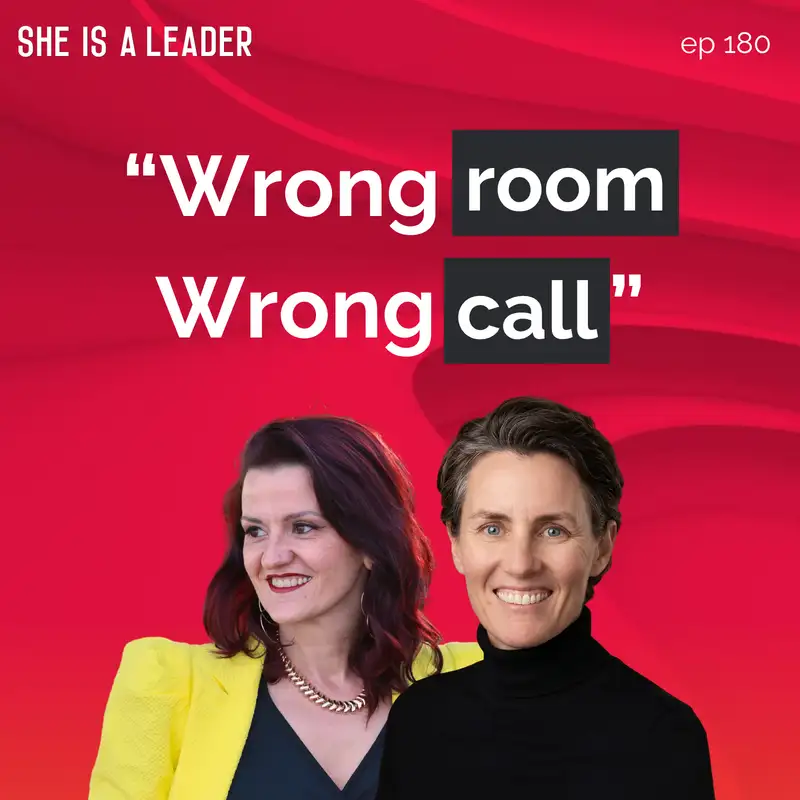
So let's get into it. You're listening to She Is A Leader, the podcast for women who are done, waiting for permission, and ready to build, lead, and scale on their own terms. I'm your host, Yvi. And every week I'll bring you conversations with women who have done the hard things and live to tell about it. And this week, that woman is Kylee Ingram. Kylee, welcome to the show. How are you?
Kylee Ingram [00:01:52]
I'm very good, Yvi. How how are you going?
Yvonne Heimann [00:01:55]
Doing well as my day is ending and your day is starting. I always love having women on the podcast from all over the world. So you enjoy your coffee while we are chatting about this this this weird thing, this decision-making thing, this getting people into a room and
You didn't necessarily start there, right? You came from documentary filmmaking. you directed stories in over a hundred countries. You now ended up building a decision intelligence platform. How did that happen?
Kylee Ingram [00:02:35]
I just think it's, you know, a natural natural movement, isn't it? yes, no. I got into decision science because of television because there's so few commissioning editors and telling you this, you know, who's choosing what's on TV is a frustrating part of producing. So I did a project once called Crowd T V where we crowdsourced our own programme.
And it did really well. And it got me really deep into decision science and what you could do with that. And my co-founder did his research in Wise Crowds and came to me and said, Hey, you you would love this. And by that time I'd kind of s done a lot of interactive things and, you know, had a couple of nominations at Cannes for that interactive part of the of the of the pro of of what you can create. so when he came and said "Do you want to do this? I was like, that sounds really interesting. And then because it is so deep and complex, it keeps it keeps one engaged".
Yvonne Heimann [00:03:41]
And you, what I love also is like you in your submission said that you care deeply about designing decisions well. And you also admitted that you don't always get it right, which I love, right? Nobody is perfect. What I'm curious here is what does it look like when you get it wrong?
Kylee Ingram [00:04:05]
Yeah, I mean it looks it you know, to not be flippant about it, it looks like the Challenger disaster or the, you know, where y the worst case is people die. and, you know, I mean we were looking at a a bad decision here recently where nobody did die. where the board, you know, at a f at a writers festival got it wrong and they all lost their jobs. The writers festival couldn't go ahead because of what they did. And when you went back and we were able to go back because I think it's a bit like those things, it's hard to say you've you know, we know if you get it right, you imp you reduce decision error by thirty percent or you and you increase innovation by twenty percent, but sometimes it's hard to show. Whereas you can definitely show what went wrong when it really went wrong. And when you look at that group of people, they all had the same cognitive style. Like it was almost freaky how similar they were. So they couldn't imagine different situations and that's kind of how they all went down the drain together.
Yvonne Heimann [00:05:08]
That's interesting. So less flexibility in the imagination. I kind of that's what I'm hearing.
Kylee Ingram [00:05:15]
Well, if we kind of dig into the research, an another person I met along the journey, which is possibly the most important person in this story, because you know my background as a as in TV does not make me the expert in the room, was Dr. Juliet Burke. And she ran a whole department at Deloitte and was looking at decision styles.
And she worked with 450 organizations that found out, you know, that 30% reduction and 20% increase in innovation. And she found we come at decisions from a cogn a a certain cognitive way that you can't change. Like you you know, Edward De Bono is you take on your hat, off your hat and you imagine other things, you can only really think in one of two ways. So you're thinking about risk or you're thinking about options or process or evidence and it's hard to adjust from that. So if and what happens with the way we think, and you see it like you see it in the way society, you know, where or maybe it's not so much it's part of society is, you know, social media. Social media puts us into these buckets. We enjoy these buckets because they speak like, you know, it's the it's. It feels good for us. We we get the rub against people that don't think the same way and we're like, I can't be bothered with that. Whereas you can't run your organization that way. You need this diversity of cognition, you need experience, and we know you also need outward some outward facing diversity matters too in decisions. And and what what we're doing at Wiser is we're just trying to help you understand live who you have and what you're missing from all of those perspectives and how you can you know, how you can design a decision room with with everything you need.
Yvonne Heimann [00:07:16]
So decision intelligence to me sounds like it's a framework, but you're essentially saying it's a full-on infrastructure. Would you talk about what's the difference and why does that distinction matter of how a leader actually uses decision intelligence and implements
Kylee Ingram [00:07:34]
Yeah, there's a few things to unpack there because I think right now with AI decision intelligence is often seen as AI making intelligent decisions for you. And AI, even if you said to AI, I need somebody in the room like this, it can't interrogate for a long time the way a person can. So we are pe we are people first company. If we use AI to look at some of the insights for you, but really we're trying to find you the right people.
So when we c talk about decision intelligence, sometimes I use the word decision science to keep away from that AI piece or distinguish it. But that's kind of what it means. And I think the you know, a lot of companies as they grow are told, we need a you need this framework. And then you'll get a consultant come in and you'll pay them a lot of money and it'll be this thing that sits in the background, but it's like, what have we got to do again? We've got to do this and that.
Kylee Ingram [00:08:30]
Like we have something where you can just put it in and it'll tell you, it'll show you what who you have from a cognitive perspective. And then when you go to make a decision, it's you know it structures it for you to say, look, you you are missing this piece or you're good to go. So it's I think sometimes, you know, a lot of our clients talk to us about defensible decisions. They have to make a decision, they have to show the board what was the process they used to get there. And if they can show, look.
Using Wiser, we've got a green light, we use these people, we know that you know, maybe somebody that was analytic, we didn't have enough analysis per potentially, or we did, or we pulled this person over from here. They're able to rather than restructure their company or or think like permanency in a decision group, you can pop up decision groups easily and
And it's a much more flexible solution where you're using different people. The other thing we see is our our tech will recommend people. So if you've you know, we all know the problem in organizations, it's similar people making, very few of them making all the decisions. Like, and we know who they are and what they look like, and we know who's excluded from the room. But with with this, you it's there's an you know, little button that says here.
Do you want to add Mary? She would bring this, you know, kind of skill or this set to the thing. And all they gotta do is click on it. And we see them clicking on it. But forty to sixty percent of those people have not been asked before. So it's also a talent identification, which is a really important part of a growing business.
Yvonne Heimann [00:10:12]
So you just talked pretty much about structural bias or structural exclusion, right? We know it's there. what does it look like in you already mentioned with your decision making rooms where it's like, hey, so by the way, this could bring a different point of view to your research, to your intelligence, to whatever you are doing.
So that you already have this proactive moment of, hey, so by the way, this is available to you. which to me sounds like just a simple, right? It's not just because, my God, we have these programs or this program, right? Especially us here in the States with DEI being cut down and all kinds of things. It sounds like an easy quote data point insertion where it's like, hey.
Could bring great point of view to it. So past just big decisions or or research moments of collecting information or testing something. what does what does this integration look like on a normal Tuesday when I don't have a specific big research but just everyday
Everyday decisions, right? It's a Tuesday. It's like the work is going, I'm not researching a specific product, or I'm not pitching a specific trying to get more money and pitching the company to a new investor or anything like that, where it's just on an everyday Tuesday. How can we bring diversity to our decisions on an on an everyday?
Kylee Ingram [00:11:58]
Yeah, well, I mean, what we've created is pretty simple in the sense that you can put all your people in, you put them into your teams, your groups, whatever, and then you say that we want to make I just want some advice on this decision. This is what I want to do. And the system goes from red to green. So it just let you know as you add people from the company, it'll say, No, you still don't, whatever. And then it's looking across three sectors. It's looking at outward facing diversity, age, gender, and ethnicity.
You don't want to homogenize anything. there's some great jury studies on what goes wrong when there's a homogenized group jury panel. and then you you've got experience. So if you are launching rocket ships, have a rocket scientist in the room. And then you've also got that cognitive diversity piece. And it's not like a personality test, it takes four minutes to do. They're free online, so you can go and do our decision profile online, but you it'll s it'll show you what you do and don't have in your or just it'll help you structure a good a good decision room for whatever you want to do on that Tuesday or whatever you're thinking about. You might, you know, pop up some new things. But there's also that stuff, did you want to touch on you kind of touched on it quickly about that structural problem of of biases? Like I think that that's kind of what we're trying to solve, aren't we? You know.
It's one thing to say we're we're doing better decisions but what we're actually trying to do is really get rid of the bases.
Yvonne Heimann [00:13:38]
And it's in we all grow up with it, right? I'm like, I had to I had to revisit myself with a new company we are building where it's like I'm tired of the money being in the hands of old white guys, and there is an old white guy standing next to me. Not that I would have considered him an old white guy, right? But I I run around with my own bias, where the gentleman I was actually talking to is quite assertive, quite helpful and totally not the person that I meant when I said the old white guy. And I'm like, okay, calling myself out on that phrasing. Gotta clean that one up. It's like we all have our own bias, right? And I love that you are making it easier to potentially see our own bias because we all have it. It's it's comes with being a human and raised by parents and this the social build and everything for that matter.
Kylee Ingram [00:14:40]
Yeah, without a doubt. And I th I think, you know, if you think you're biased, like you've they're just there. And if you're making a decision, you're bi like just as like the first thing you can do is understand that you have biases. And in Juliet's research she spoke about three main you know, the three ones that come into a decision room. And one is social bias, who gets listened to and who doesn't, and those voices that dominate. And in Western society in particular, loudness or you know loudness usually wins. Somebody that speaks a lot, they are thought to be the smartest person in the room or leadership. and that can lead to groupthink when you when you're not when you're not paying attention to that. And then you've got a information bias. So what information is being valued and what's ignored. And teams will overweight the data that confirms their view, like social media. They're you know they've made money on keeping us siloed because it's what it's part of our biases. It confirms your view and you undervalue unfamiliar sources. And that is the part in your organization that will create blind spots. And then the one that's relevant to us all today is capacity bias. How much complexity can people handle? And when their load is too high, individuals oversimplify and once again default to the familiar. And that part of the bias equation leads to a lack of creativity and quality of your outcomes. So what we're trying to do with Wiser is just reset that so it doesn't play the role that it usually does. Especially if, you know, we see a lot of organizations where 3% of people are making all the decisions and they're not. And we have another thing we see Juliet's research showed 75% of CEOs in the Western world are one of two cognitive types. They're either outwards, they're we call them achievers, they're outward orientated, or they are explorers, so they're looking for options. And those two dominate and then they pick one another. They enjoy one another. So by the time they get to middle management, there's a real erosion of this cognitive diversity because they're being picked by the leaders or they're being, you know, they're they're they're deciding in the same way and they're all enjoying one another's company and yeah.
Yvonne Heimann [00:17:03]
So interesting question. When we see those two specifically kind of play off of each other and vice, what if I'm not one of those two? So can I don't know. Literally, I'm like, sweet, what if I'm not one of those two? So I'm pretty much lost, lost in the sea of sameness and don't have the same chances of working my way up, or I have the same impact, or, or anything, is there something that we can and love me some personality profiles? Even the even the one on yours. Yes, the moment I went to your website and I saw personality profiles, I'm like, my god, yes, we're talking my language. So scroll moment. what
What can I do, for example, when I don't fall into one of those two and I feel like great, sweet, awesome, I see the same people rising up, I see the same people always being clicky over there, they have their thing. What can I do to get myself out of this? I don't want, yeah, probably partially also bias. How what do I do with this?
Kylee Ingram [00:18:20]
Yeah, well, I mean it depends on what kind of leader you've got to. If you had an inclusive leader that understood the science, you would be fine because they would be like, please speak up. And what ends up happening potentially with somebody that doesn't see themselves in the decisions that are being made or see themselves in the room is you the worst thing that ends up happening is they go quiet. They give up. And that silence is, is when it's all over. You know, the arguments sti everyone's still hopeful at that point or whatever, but once you're quiet, you're gone. So doing your decision profile so you understand how you come at decisions is a good for you to understand that part. It's research based, you know, very heavily research based. So it's good to go on that one. And then the other one of the other tools we just released it in at Christmas was a communication tool that is now sitting in the thing. We a charity charity came to us and asked us could we they use our decision profiles to work out how to communicate with bequesters and donors. And I said, yes, how are you doing it now? And I think you we went down this rabbit hole of what did personalization mean? And you know, they're going, Yvi how's your cat and your dog and your budgie and whatever else you got and that's.
Kylee Ingram [00:19:40]
That's them being personal to you, but when we analyze 300 emails to owners, they were missing achievers, guardians who are risk, so outcomes, risk, and analyzers that are evidence-based people. And remember, outcomes people are CEOs, so you're missing talking to them completely. And so these emails are very chipper and they're telling you what they're saving or.
They're curing, but they're not delivering the message the way people receive it. So, one of the tools we now have within that organizational thing is imagine you want to talk to your boss and you're like, right, I'm gonna write this email, you've written it out, and you're like, right, I'm gonna send this. Our system will say, Hey, look, he's an explorer, you need to like step back, you need to lead with this and write this, you know, maybe write this or, you know, or add some things. So we're also trying to help, and we've seen teams that are deemed a little bit difficult or have difficulties communicating with that part. Understanding how some somebody receives things is very important, and they're cognitively wired that way to receive it. So you writing it, AI can help you write a nicer email, which is wonderful. but you still have to understand what is important to them when they're making a decision.
Yvonne Heimann [00:21:07]
And it's it's coming back around on on a complete simplicity level. It's like, how do we how do we process information? How do we perceive information? What do we do with it? And my favorite example always is with quote perception, right? It's like think of the color red. Chances are you're gonna think of whatever red is close by that's sitting somewhere around.
And the shade of red that I think of is completely different. So what you have done is make it easier to not only be understood, but to make it hopefully impossible to be misunderstood.
And to be seen where it's you're suddenly speaking their language.
Kylee Ingram [00:22:00]
Well, and and this is what we talk about. Decision language. Do you end you know, w one of the the study points we're doing at the moment is that change in decision language together. Like do you you know, do you end up with a better language for you all to understand that there are gaps in your perception, in whether it be in the red or the well, when somebody says strategy, it might mean two completely different things to two different types of people.
Yvonne Heimann [00:22:27]
Oh my god. The the i we probably could spend three more episodes on language alone, which is one of my favorite topics too, just having spoken German 24 years of my life and then come into English, which has about a tenth of the amount of words that German language has. It's like we we have so many.
Different levels between I like and I love you, and all of them mean a different level of it, and it's still not as precise as language could be.
Kylee Ingram [00:23:04]
Are you like the are you like people that have many words for ice? You've got all the words for love. That sounds important. Maybe English should improve itself there.
Yvonne Heimann [00:23:13]
And it's for me, it's always the the great example of intent and impact between the perception of the word you are using. I'm working in in our operational company and Ask Eevee. We're working right now with a company that uses the word entity and every single department perceives the word entity differently. And it's like how specifically and we need to clean up the language so that we actually can combine the processes and it's, it is so interesting to to dive into this and to understand better how people perceive the word or what it means to them or just all of it that comes together for that. So talking about decisions and talking about our audience and everybody that's now like, my God, okay, I'm I'm seeing where you ladies are coming from. I get it. I have some big decisions coming up.
I wanna do it right, I wanna get the best chance I have to make the decision right. What is one thing they can do right now? One thing they should look at right now to start the process of having better rooms to make better decisions.
Kylee Ingram [00:24:27]
Well, I would ninety percent of our clients, I'd start with decision profile mapping, where you just map your people. You understand who you have in groups or who you have just in your executive team or your board, because look at that one board. They all lost their jobs just because they were of their sameness. And you can look at Enron, you can look at NASA, you can look at all the ways that's gone wrong. Just understanding what you're missing from that point is your greatest starting point. And you can do that.
You probably do get that done if everybody's on board and doing their decision profile quickly in almost under an hour, you know. It's not a hard lift, it's a it's an easy lift and an important one.
Yvonne Heimann [00:25:03]
With that, you all have your marching orders. Go grab Kylee's free decision profile tool. Yes, we usually don't do call to actions, but you know me. I love an amazing tool and getting profiles. And there's your first thing to do. Go map your decision profiles. Go figure out who you have in the room and how they make decisions. And if you actually number one, have diversity in the indecision processes, or if you ended up with a room full of people that make decisions all the same ways. And after that, go take action. Go do something with it. We are not just here to collect data. We are not just here to just listen. We are here to do things. So go do things. Go build new rooms. Go learn how we all make decisions. And with that, I'm Yvi. And that is She Is The Leader. And I'll see you next week again. Thanks so much for coming on, Kylee.
Kylee Ingram [00:25:59]
Thank you for having me.